- EU projects
- Research
- Fish tagging
- Lumpfish research
- Oceanography
- Seabed mapping
- Arnarfjörður
- Drekasvæði
- Ísafjarðardjúp
- Jökulbanki
- Jökuldjúp
- Kolbeinseyjarhryggur and adjacent area
- Kolluáll
- Langanesgrunn
- Látragrunn
- Nesdjúp
- Reykjaneshryggur and adjacent area
- Selvogsbanki
- South of Selvogsbanki
- South of Skeiðarárdjúp
- South of Skerjadjúp
- Southeast of Lónsdjúp
- Southwest of Jökuldjúp
- Suðausturmið
- Suðurdjúp
- Vesturdjúp
- East of Reykjaneshryggur
- Vestfjardarmid
- Seal research
- Whale Research
- Advice
- About

Catch Advice for Pelagic Fish Stocks in the Northeast Atlantic
30. September 2026
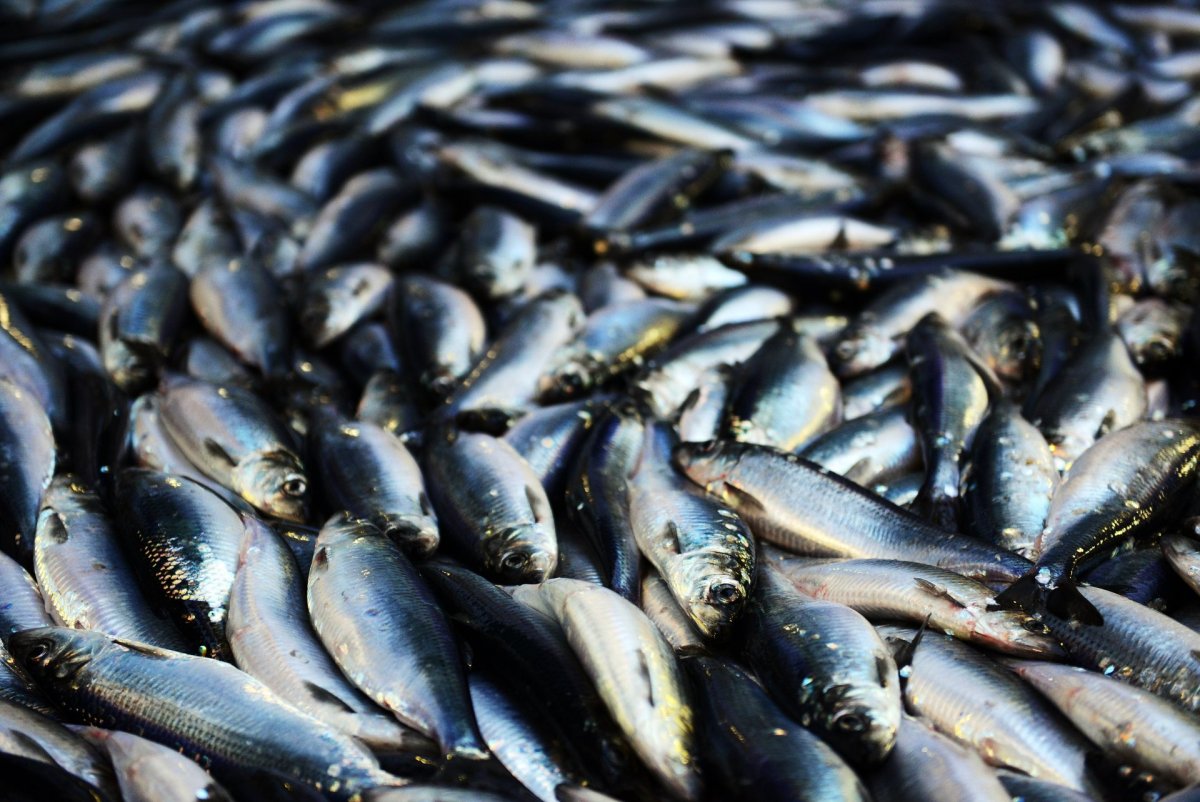 Norwegian Spring-Spawning Herring.
Photo: The Institute of Marine Research (IMR) in Norway.
The International Council for the Exploration of the Sea (ICES) is today, September 30, issuing advice on fishing opportunities for Norwegian spring-spawning herring, Atlantic mackerel, and blue whiting for the year 2027 (see ices.dk). The main results are detailed here.
10% Increase for Norwegian Spring-Spawning Herring
In accordance with a long-term management strategy, ICES advises that the catch of Norwegian spring-spawning herring in 2027 should be no more than 588 004 tonnes. Current year advice was just under 534 thousand tonnes, representing a 10% year-on-year increase.
Year-classes in recent years have been small, with the 2016 year-class contributing to the bulk the catches in recent years. However, the 2021 and 2022 year-classes, which are currently entering the spawning stock biomass, are estimated to be above average size, leading to the increase in advice between years.
Total catches for 2026 are estimated to be around 583 thousand tonnes, which is just over 9 % above this year's advice.
See the advice here on the Marine and Freshwater Research Institute website.
102% Increase for Mackerel
ICES advises that when the maximum sustainable yield (MSY) approach is applied, mackerel catches in 2027 should be no more than 352 938 tonnes.
Current year advice was just over 174 thousand tonnes, representing a 102% increase in advice. The reason for this is that the size of the spawning stock biomass is now estimated to be above Blim, meaning the advice is based on a higher fishing mortality rate than last year. The spawning stock has increased slightly from last year due to improved recruitment and higher mean weights-at-age in the stock, but remains low in a historical perspective.
Total catches for 2026 are estimated to be just over 398 thousand tonnes, which is 128% above advice.
See the advice here on the Marine and Freshwater Research Institute website.
25% Increase for Blue Whiting
In accordance with a long-term management strategy, ICES advises that blue whiting catches in 2027 should be no more than 1 064 191 tonnes. Current year advice was 851 thousand tonnes, representing a 25% increase in advice compared to last year.
There are three reasons for the increase in the advice: an estimated increase in stock biomass from 2026 to 2027, an upward revision of the perception of stock biomass over the recent years, and a good incoming year class (2024). In accordance with the long-term management strategy, the increase in catch limits between years was capped at 25%, but would otherwise have been 31%.
Total catches for 2026 are estimated to be just over 1.11 million tonnes, which is 30% above advice.
See the advice here on the Marine and Freshwater Research Institute website.