- EU projects
- Research
- Fish tagging
- Lumpfish research
- Oceanography
- Seabed mapping
- Arnarfjörður
- Drekasvæði
- Ísafjarðardjúp
- Jökulbanki
- Jökuldjúp
- Kolbeinseyjarhryggur and adjacent area
- Kolluáll
- Langanesgrunn
- Látragrunn
- Nesdjúp
- Reykjaneshryggur and adjacent area
- Selvogsbanki
- South of Selvogsbanki
- South of Skeiðarárdjúp
- South of Skerjadjúp
- Southeast of Lónsdjúp
- Southwest of Jökuldjúp
- Suðausturmið
- Suðurdjúp
- Vesturdjúp
- East of Reykjaneshryggur
- Vestfjardarmid
- Seal research
- Whale Research
- Advice
- About

Two new studies shed light on the diet of capelin
20. October 2026
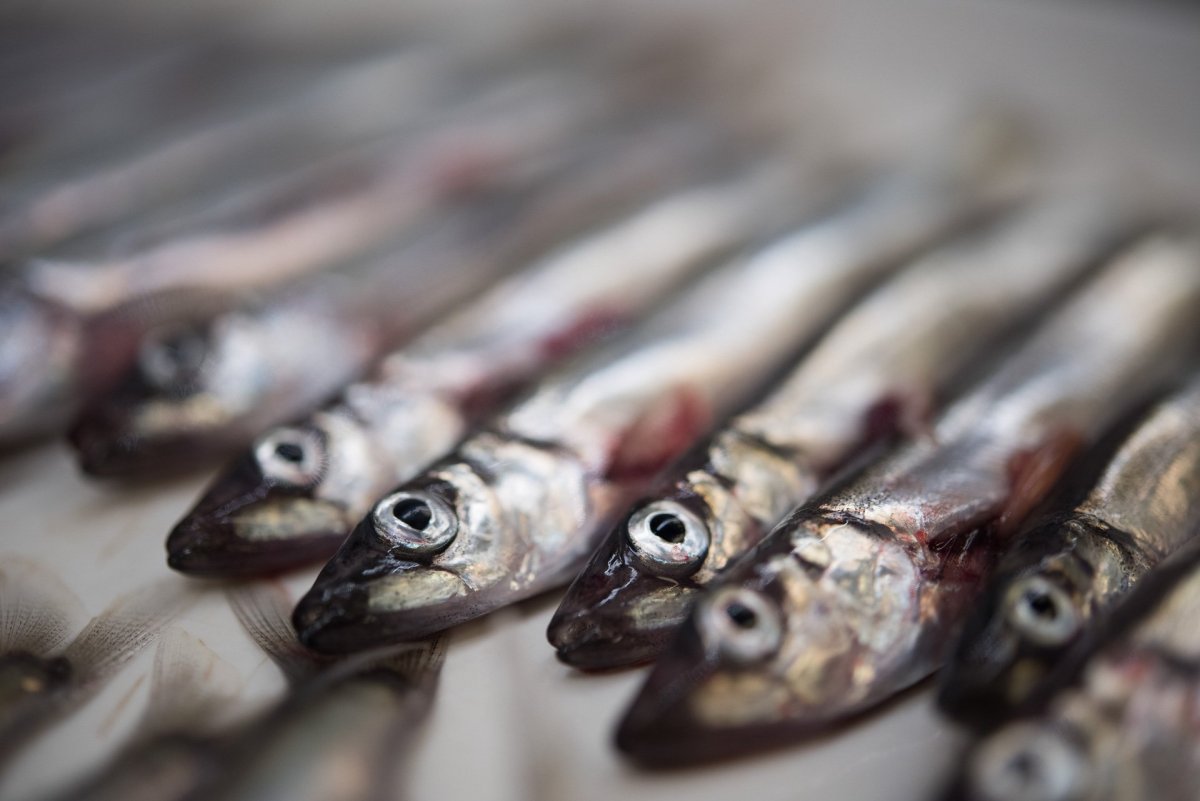 Capelin. Photo: MFRI.
Two new studies by scientists at the Marine and Freshwater Research Institute provide new insight into the diet and feeding activity of capelin. One of the study examined capelin diet during autumn in the current feeding grounds off East Greenland here, while the other investigated whether capelin continue to feed during winter as they migrate towards spawning grounds south of Iceland, here.
Capelin is a key species in the marine ecosystem around Iceland. It feeds mainly on zooplankton and is itself an important prey for cod, other fish, seabirds and marine mammals. Changes in capelin diet and feeding activity can therefore have broader effects throughout the food web.
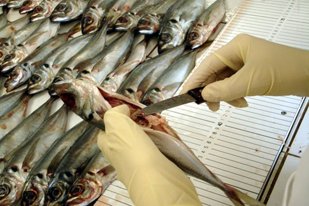
Stomachs and stomach content examined during capelin feeding study.
New feeding grounds and changes in diet
In recent decades, the feeding grounds of capelin have shifted westwards, increasingly towards the East Greenland shelf. In a study of capelin diet during autumn 2018–2021, food was found in a high proportion of stomachs, ranging from 77 to 98%.
The results indicate that capelin have adjusted their diet to their new feeding grounds. In their former feeding areas north of Iceland, the diet was largely dominated by copepods, whereas euphausiids now play a much greater role off East Greenland.
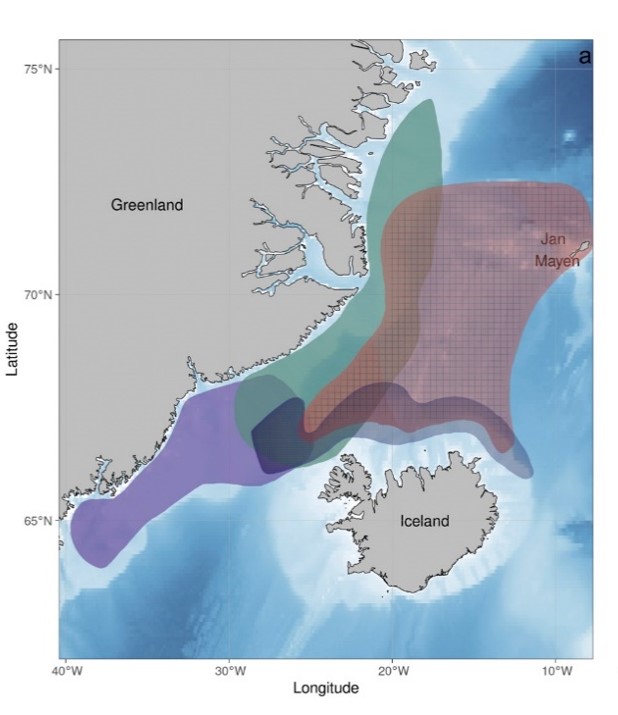
The figure shows changes in feeding grounds of capelin at East Greenland, green color
indicates feeding grounds of adult capelin, purple those of juveniles.
Former grounds, north of Iceland, shown in red.
The study further showed that autumn is an important feeding period for capelin, with feeding activity comparable to levels observed during summer, as previously reported. This suggests that autumn feeding may make an important contribution to the annual energy intake of capelin, particularly in the context of changes in their distribution.
Capelin also feed during the spawning migration
Winter feeding during the spawning migration has often been assumed to be limited, as energy reserves are largely allocated to maturation and migration.
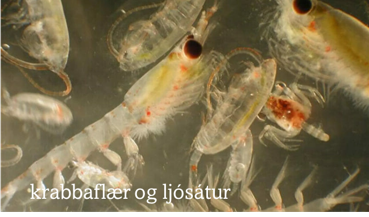
Copepods (smaller) and euphausiids (larger) are important prey for capelin.
However, food was found in more than 60% of the stomachs examined. Copepods and euphausiids were again the dominant prey groups, while amphipods and chaetognaths appeared to play a greater role in winter than in autumn. Feeding intensity was lower in winter than in autumn but was still clearly evident.
The results therefore show that capelin do not necessarily stop feeding once the spawning migration begins. Winter feeding should be taken into account when considering capelin energy budgets and their role in the marine food web.
References:
Astthorsson, O. S., & Gislason, A. (1997). On the food of capelin in the subarctic waters north of Iceland. Sarsia, 82(2), 81-86.