- EU projects
- Research
- Fish tagging
- Lumpfish research
- Oceanography
- Seabed mapping
- Arnarfjörður
- Drekasvæði
- Ísafjarðardjúp
- Jökulbanki
- Jökuldjúp
- Kolbeinseyjarhryggur and adjacent area
- Kolluáll
- Langanesgrunn
- Látragrunn
- Nesdjúp
- Reykjaneshryggur and adjacent area
- Selvogsbanki
- South of Selvogsbanki
- South of Skeiðarárdjúp
- South of Skerjadjúp
- Southeast of Lónsdjúp
- Southwest of Jökuldjúp
- Suðausturmið
- Suðurdjúp
- Vesturdjúp
- East of Reykjaneshryggur
- Vestfjardarmid
- Seal research
- Whale Research
- Advice
- About

Study on Knotted Wrack Recovery in Breiðafjordur
09. September 2026
 Seaweed harvesting.
Photo: Svanhildur Egilsdóttir
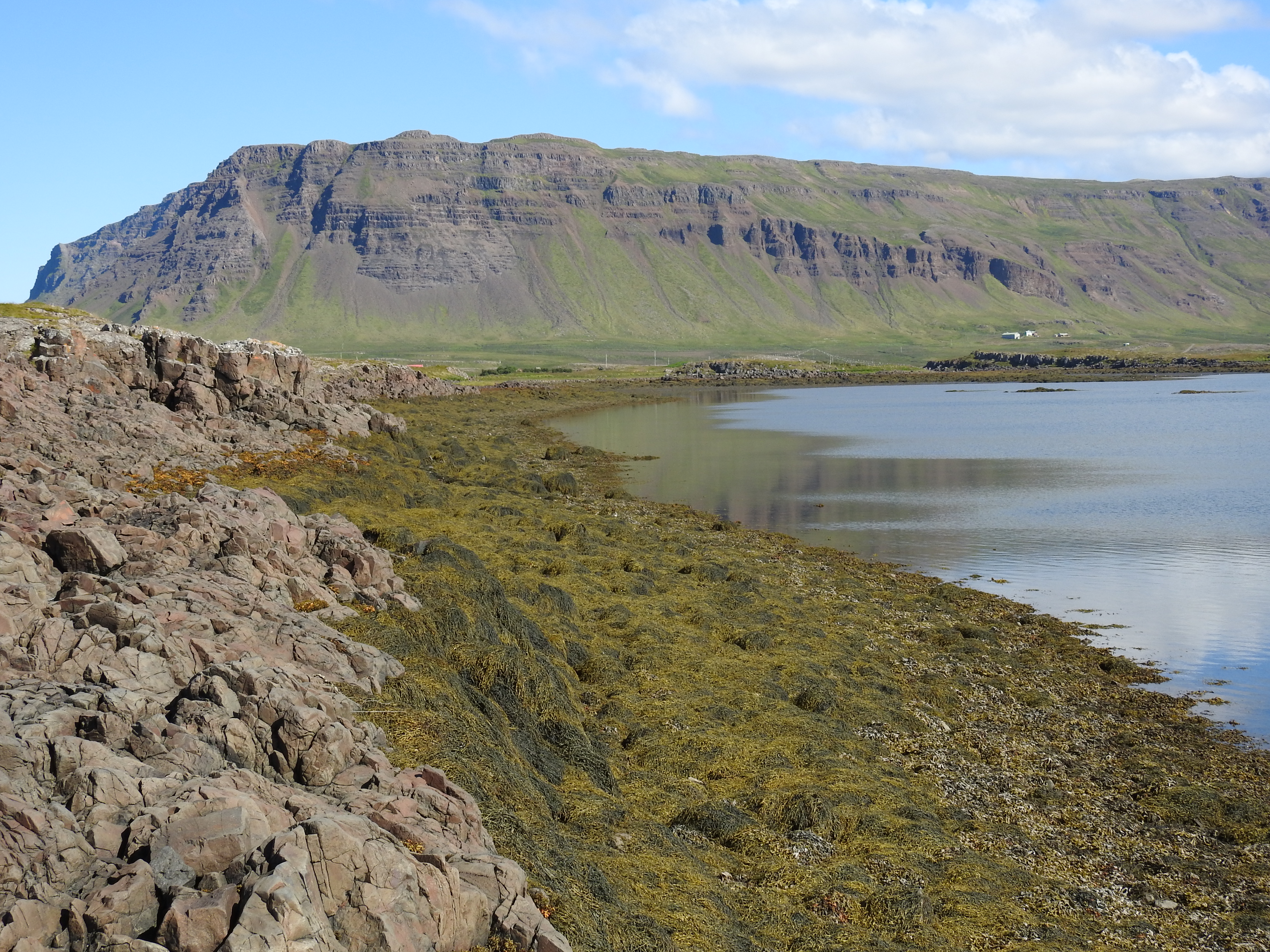 A recent study by scientists at the Marine and Freshwater Research Institute (MFRI) examined the recovery of knotted wrack (Ascophyllum nodosum) following harvesting in Breiðafjörður Bay, western Iceland. Knotted wrack has been harvested in the area for around 50 years, primarily using mechanical cutting barges.
To investigate post-harvest recovery, the Icelandic Seaweed Corporation (Þörungaverksmiðjan at Reykhólar) assisted researchers by harvesting experimental plots at four different locations in Breiðafjörður. At each site, two adjacent unharvested control plots were established for comparison.
The study was conducted over a five-year period, from 2016 to 2021. Researchers measured knotted wrack biomass, canopy cover and plant height annually to assess recovery following harvesting.
The results showed that knotted wrack cover returned to pre-harvest levels within three years at all study sites. Biomass recovered within five years, indicating substantial regeneration of the harvested stands. However, plant height had not fully returned to pre-harvest levels by the end of the study, suggesting that individual plants require a longer period to regain their original size.
Harvesting was most effective in the middle section of the intertidal zone, where between 35% and 66% of the biomass was removed. Considerable variation was observed among sites, largely due to differences in shoreline topography and substrate. Large boulders often provided shelter from the cutting equipment, leaving patches of mature knotted wrack intact.
The findings support the current rotational harvesting practices used in Breiðafjörður and demonstrate that knotted wrack populations can recover successfully following harvesting when adequate recovery periods are allowed. The study also highlights the importance of local environmental conditions in influencing harvesting efficiency and regrowth.
The scientific article is available here.
Photo from Breidafjordur by Lilja Gunnarsdottir.