- EU projects
- Research
- Fish tagging
- Lumpfish research
- Oceanography
- Seabed mapping
- Arnarfjörður
- Drekasvæði
- Ísafjarðardjúp
- Jökulbanki
- Jökuldjúp
- Kolbeinseyjarhryggur and adjacent area
- Kolluáll
- Langanesgrunn
- Látragrunn
- Nesdjúp
- Reykjaneshryggur and adjacent area
- Selvogsbanki
- South of Selvogsbanki
- South of Skeiðarárdjúp
- South of Skerjadjúp
- Southeast of Lónsdjúp
- Southwest of Jökuldjúp
- Suðausturmið
- Suðurdjúp
- Vesturdjúp
- East of Reykjaneshryggur
- Vestfjardarmid
- Seal research
- Whale Research
- Advice
- About

Start of the autumn capelin survey
28. August 2026
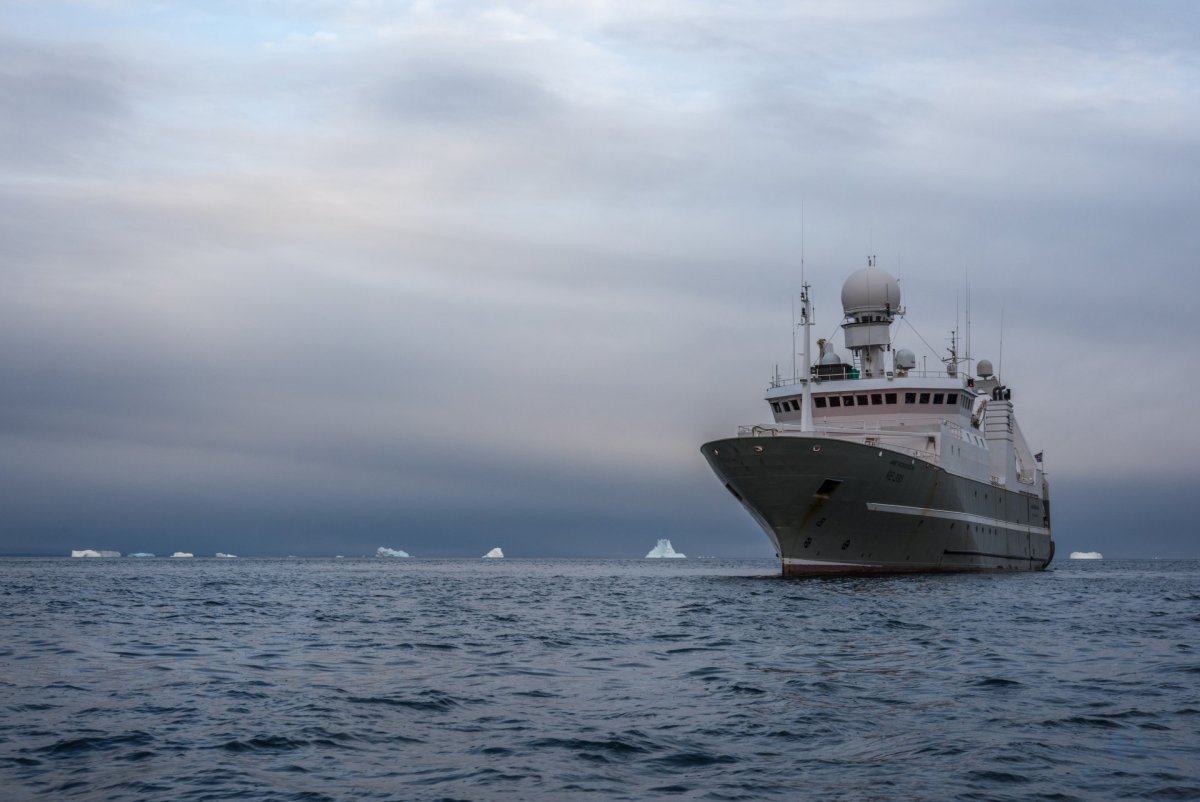 The research vessel Árni Friðriksson will join the survey on 8 September.
Photo: Svanhildur Egilsdóttir.
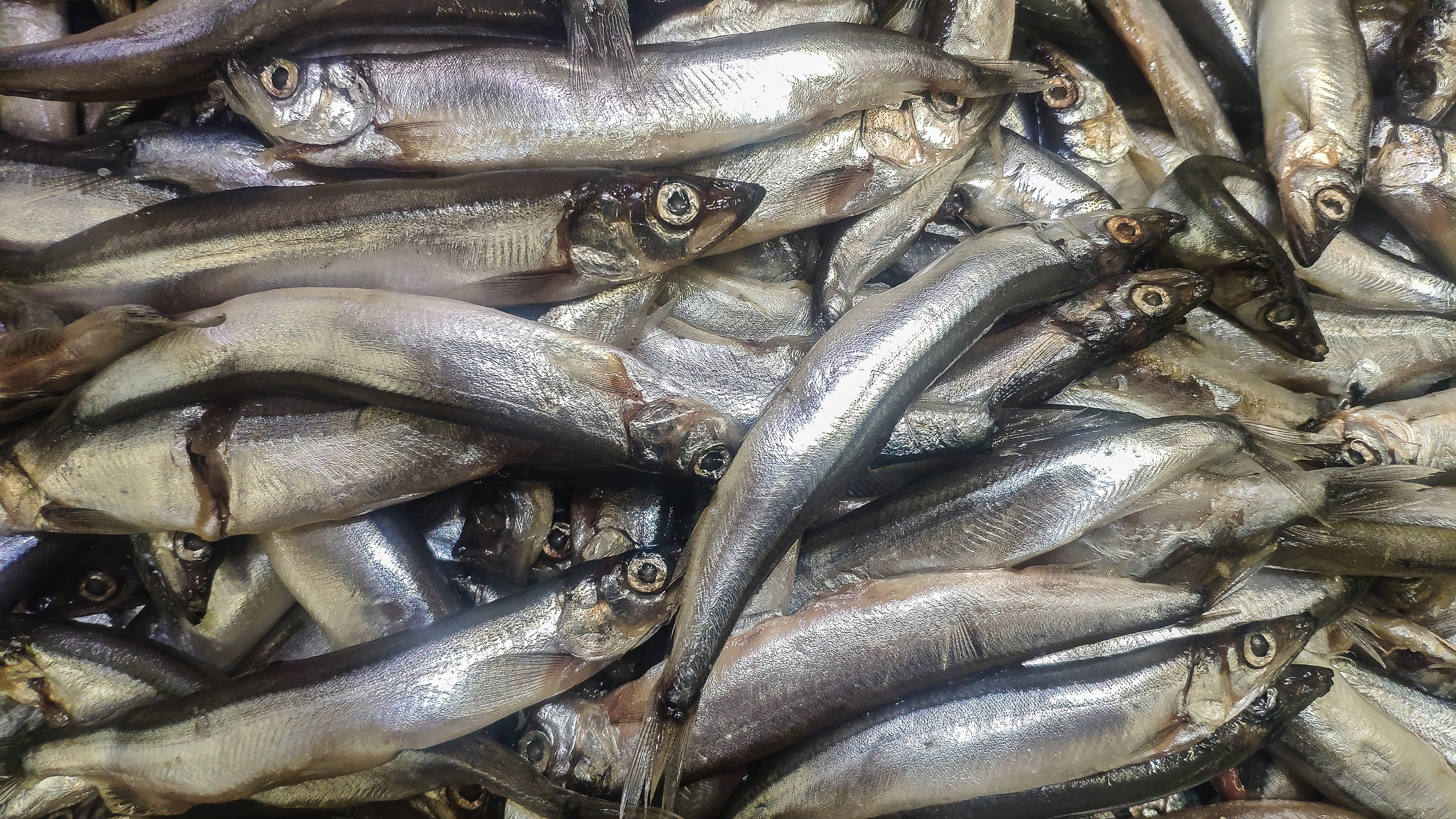 The 2026 capelin autumn survey began on 23 August and will continue until 24 September. This is a joint survey conducted by the MFRI (Marine and Freshwater Research Institute) in Iceland and the GINR (Greenland Institute of Natural Resources). The research vessel Tarajoq, on behalf of the GINR, started its part last weekend southwest of Iceland (Figure 1, below). The research vessel Árni Friðriksson will then join the survey on September 8. The r/v Tarajoq’s survey is scheduled to take 16 days, while the r/v Árni Friðriksson is expected to be at sea for 17 days. In total, the vessels are planned to sail 6084 nautical miles.
The track and location of the research vessels can be seen here.
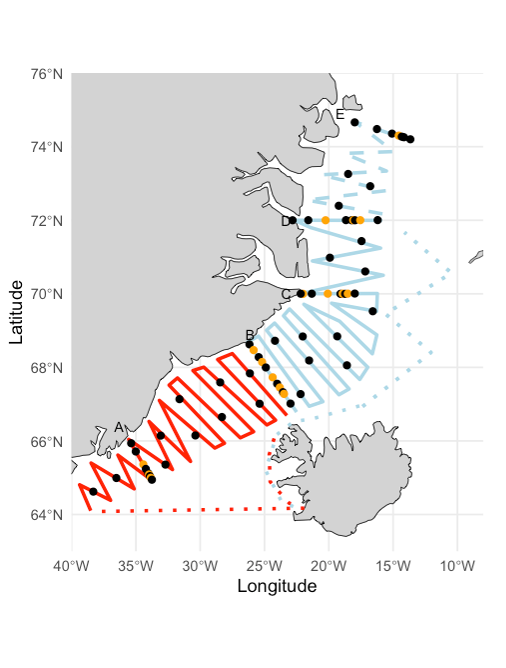
Figure 1. The planned survey transects of r/v Tarajoq (red line) and r/v Árni Friðriksson
(blue line) in the capelin survey in autumn 2026. Standard oceanographic sampling stations
with different sampling gear are shown as dots.
The purpose of the survey
The survey aims to estimate the abundance of both immature and mature capelin in the Iceland-East Greenland-Jan Mayen area (IEGJM). A similar survey has been conducted since 1978.
Since 2018, the survey has been adapted into a collaborative ecosystem survey, allowing researchers to collect additional information on capelin biology and the surrounding pelagic ecosystem. It involves sampling and measurements of phytoplankton (under the PHATE project), mesozooplankton, macrozooplankton, pelagic fish species and the physical environment in the area.
Again, this year, MFRI has increased its contribution to ecological studies by participating with two whale observers on the r/v Árni Friðriksson. The resulting whale counts along the tracks can be followed here.
The results of the capelin measurements are expected to be available around mid-October. MFRI will then release revised fishing advice for the upcoming fishing year (2026/2027).
GINR and MFRI joint workshop
On 22 August, researchers from both institutions held a joint workshop (photos below) to align procedures across both vessels, including quality control of the acoustic and fish data collected.
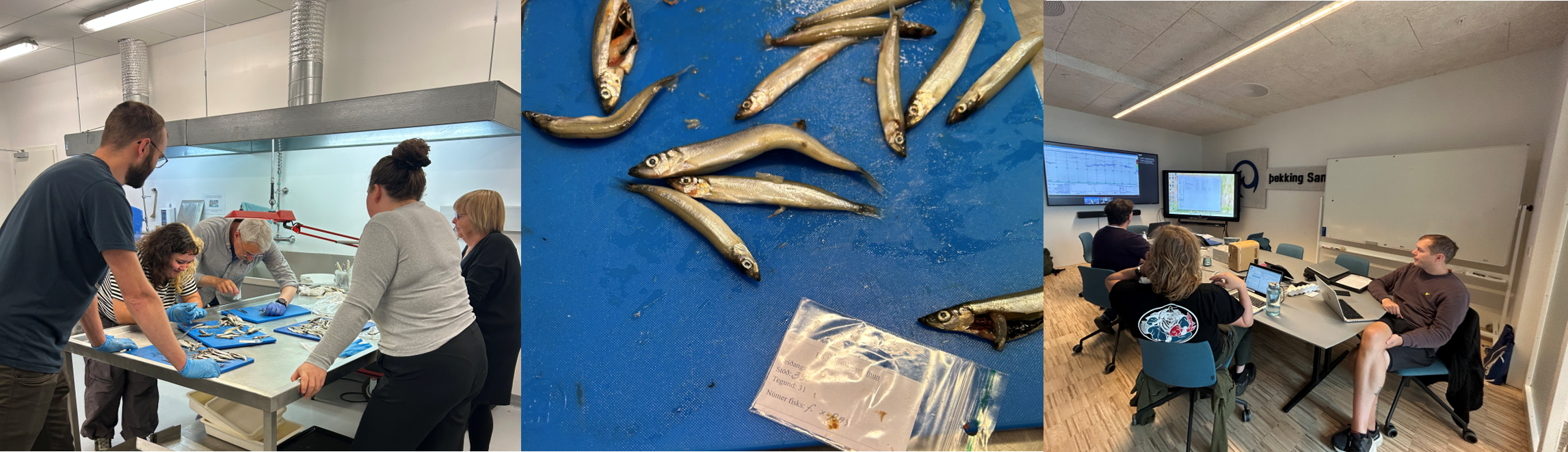
Figure 2. Researchers from both institutions working with capelin samples (left photo) and aligning acoustic data-processing procedures (right photo) during the joint workshop on 22 August.