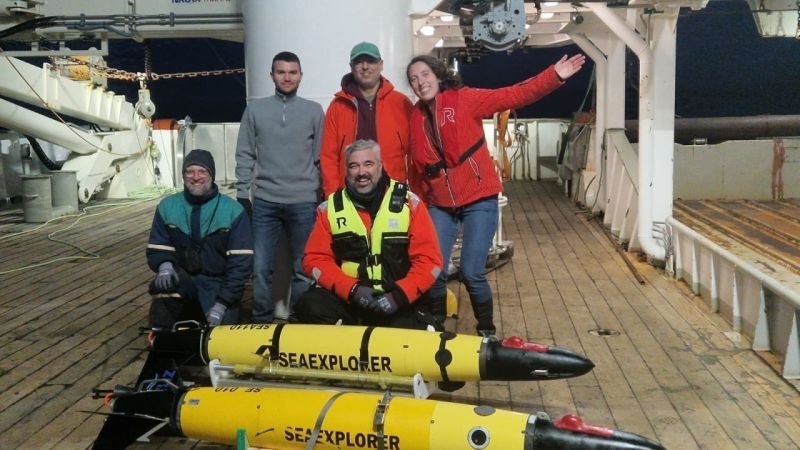
As the E(ddies)GC survey aboard RV Þórunn Þórðardóttir draws to a close, the international team of researchers is completing several weeks of intensive fieldwork off East Greenland. The survey brings together scientists from institutions in Belgium, Italy, Poland, and Denmark. Led by the Flanders Marine Institute (VLIZ), the research aims to unravel the impact of ocean eddies, ring-shaped rotating features found off Eastern Greenland.
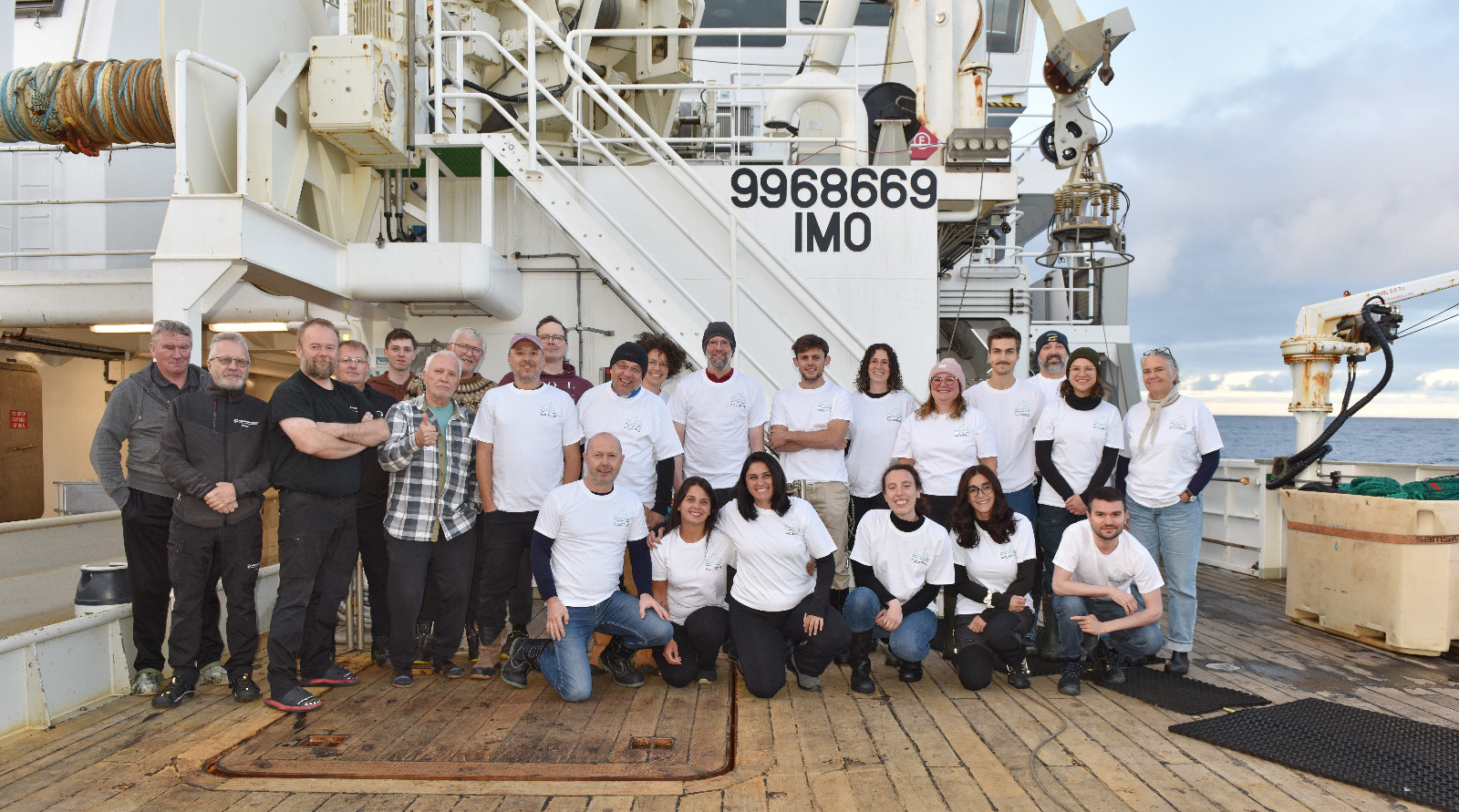
The E(ddies)GC research team and crew on board Þórunn Þórðardóttir. Photo: Mirek Darecki.
Eddies can exist as separate entities
Among other generating processes, these features are commonly shed by meandering ocean currents, such as the East Greenland Current. In turn, eddies can also exist as separate entities after formation, with the ability to trap and transport water with properties different from those of the surrounding regions. They can also reinteract with currents, generating variability along ocean current pathways.
However, observing ocean eddies in the Arctic is not trivial. Compared to other regions, eddies at high latitudes have a much smaller scale (on the order of a few to tens of kilometers) than, for instance, those in the subtropical oceans (on the order of 100 kilometers). The latest generation of satellite-altimeter data from the Surface Water and Ocean Topography (SWOT) mission does provide resolution fine enough to capture both eddies and boundary currents in high-latitude regions. However, even a short delay in satellite data delivery can make it challenging to specifically locate and sample eddies in near real time.
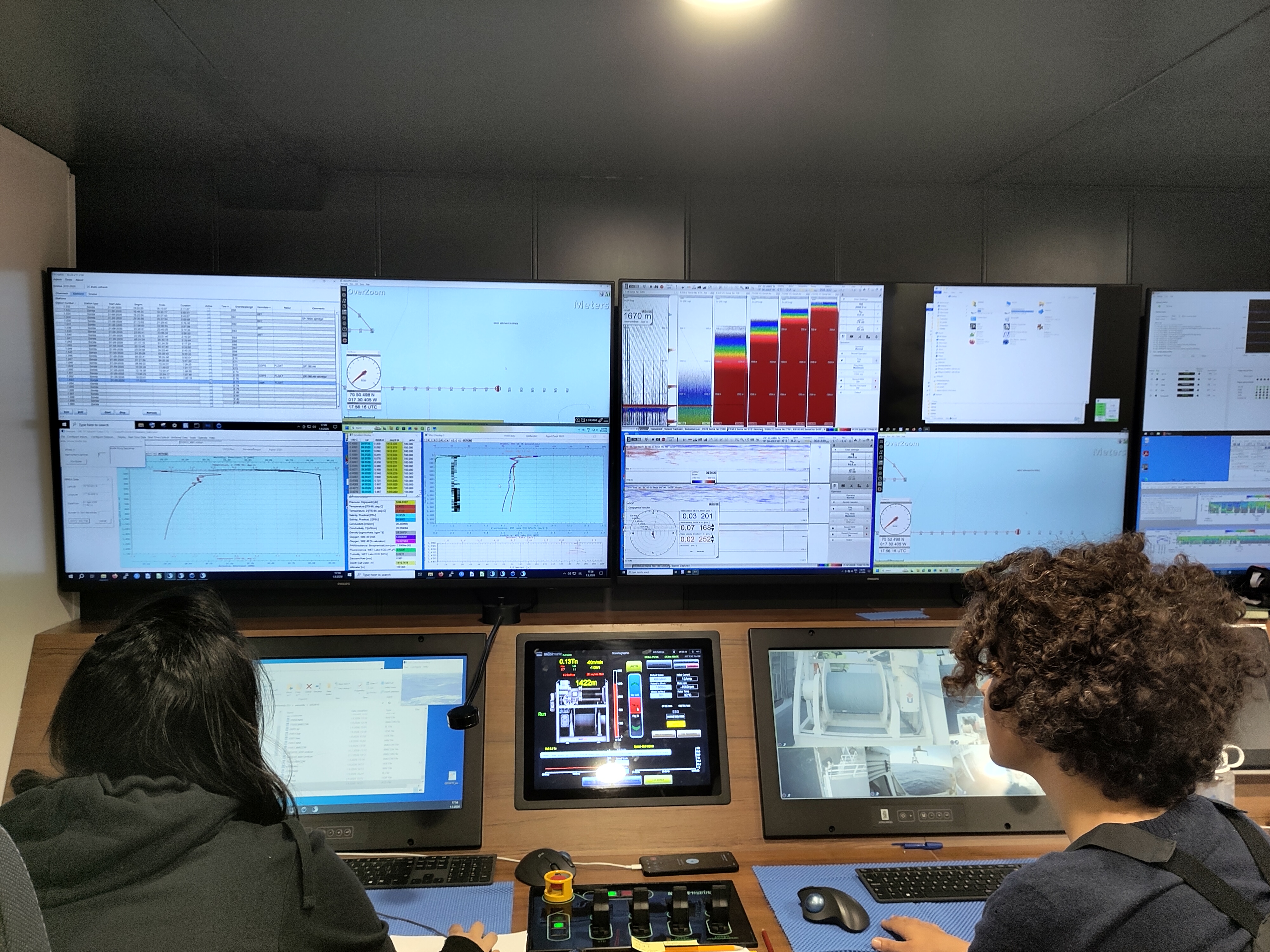
In the CTD control room during a measuring station.
Temperature, salinity, velocity, nutrients, phytoplankton concentration, optical properties and more is measured
During the E(ddies)GC cruise onboard RV Þórunn Þórðardóttir, researchers are using SWOT datasets to target both the East Greenland Current and eddy-like features, while intensively measuring oceanographic parameters such as temperature, salinity, velocity, nutrients, phytoplankton concentration, optical properties, gases such as dissolved CO₂, and microplastic particles in the surface layer and in the atmosphere. The cruise also recovered two ocean gliders that had been remotely operated from VLIZ in the region since mid-June, and deployed four new Surface Velocity Program Barometer (SVPB) drifters, which will monitor the surface ocean over the coming months.
In addition, an oceanographic current meter mooring that had been deployed from Þórunn Þórðardóttir last year, but had not been located since then, was successfully recovered after being detected acoustically. The mooring had been dragged 12 km away from its original location, apparently by an iceberg. The recovered data closes a gap in the EGNOG/ROVER mooring array, providing a continuous one-year time series of observations of the East Greenland Current at 71°N.
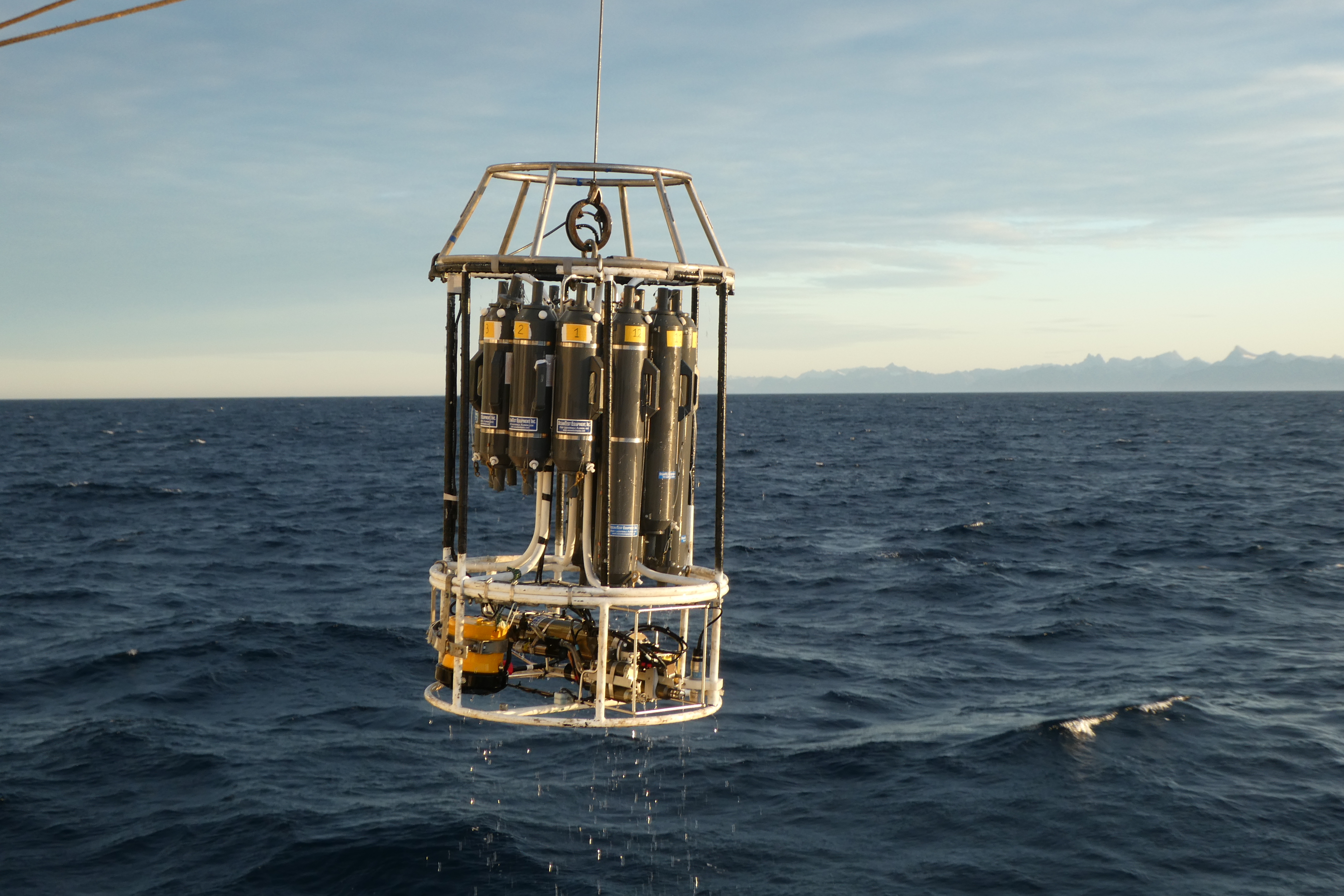
CTD taken on board after a station near the Greenland coast. In the lower part, sensors are mounted to measure seawater properties, including current velocity, temperature, and salinity. The bottles in the upper part are used to collect water samples from different depths.
In a later phase of the E(ddies)GC project, the observations collected in the field will support modelling groups in better representing eddies, helping to improve numerical weather prediction and climate models.
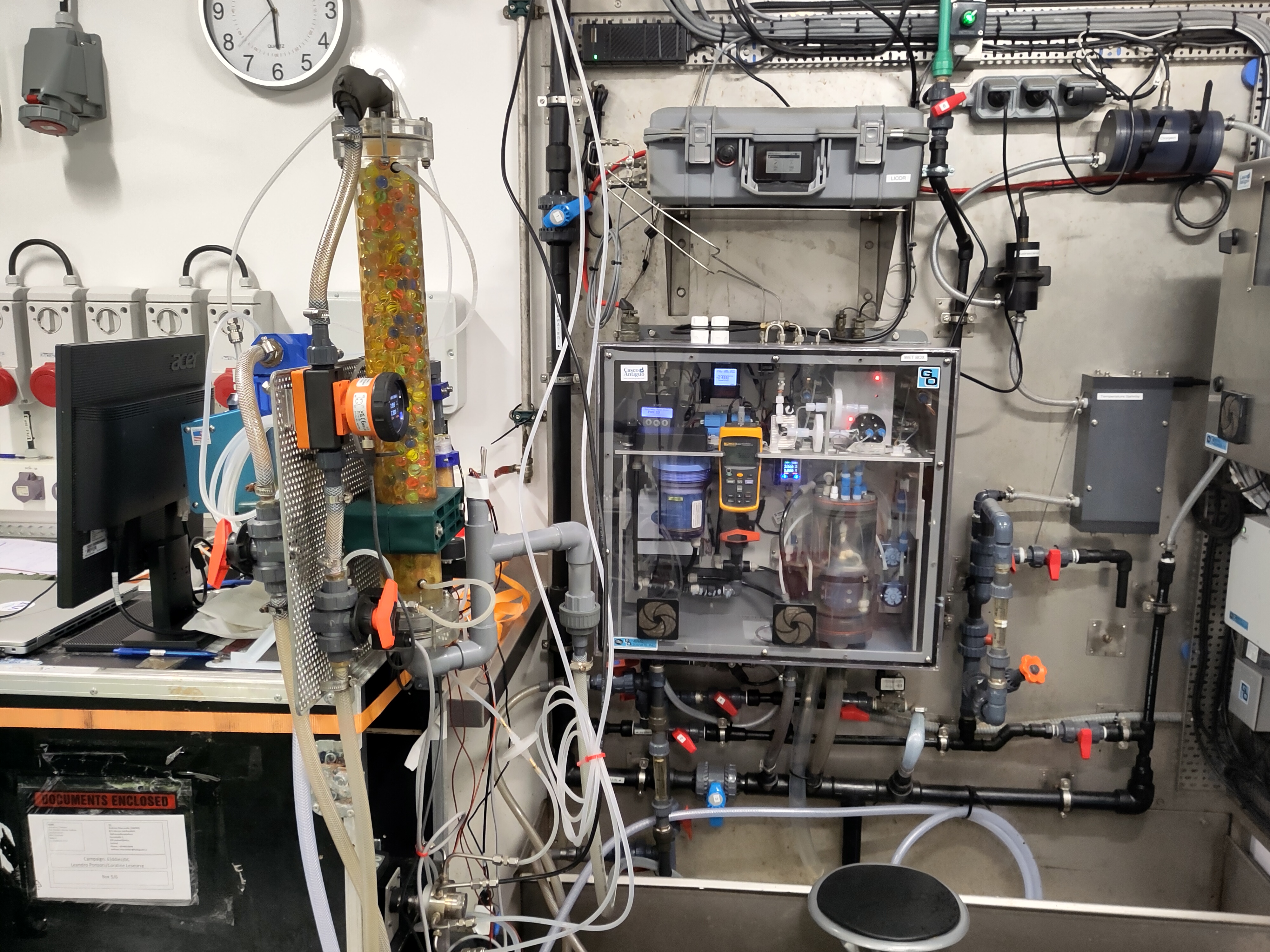
Underway systems for measuring CO2 and methane in the sea surface.
Apart from Hafrannsóknastofnun, partners involved in the campaign include the University of Naples Federico II (co-leader, Dani Flocco), DTU Technical University of Denmark (co-leader, Rafael Gonçalves-Araujo), University of Naples Parthenope, the Danish Meteorological Institute (DMI), the Institute of Oceanology of the Polish Academy of Sciences, Université catholique de Louvain, the University of Bergen (UiB), Scripps Institution of Oceanography, NIOZ Royal Netherlands Institute for Sea Research, and CSIRO Australia.
The E(ddies)GC cruise is funded through the Aquarius RI Project (Integrating Research Infrastructures, Connecting Scientists, Enabling Transnational Access – AQUARIUS), which is funded by the European Union. Both research vessels operated by Hafrannsóknastofnun are accessible through this programme. Additional support was provided by the Department Kanselarij en Buitenlandse Zaken (DKBuZa; Kanselarij en Buitenlandse Zaken | Vlaanderen.be).
Photos: Andreas Macrander, unless otherwise indicated.