- EU projects
- Research
- Fish tagging
- Lumpfish research
- Oceanography
- Seabed mapping
- Arnarfjörður
- Drekasvæði
- Ísafjarðardjúp
- Jökulbanki
- Jökuldjúp
- Kolbeinseyjarhryggur and adjacent area
- Kolluáll
- Langanesgrunn
- Látragrunn
- Nesdjúp
- Reykjaneshryggur and adjacent area
- Selvogsbanki
- South of Selvogsbanki
- South of Skeiðarárdjúp
- South of Skerjadjúp
- Southeast of Lónsdjúp
- Southwest of Jökuldjúp
- Suðausturmið
- Suðurdjúp
- Vesturdjúp
- East of Reykjaneshryggur
- Vestfjardarmid
- Seal research
- Whale Research
- Advice
- About

International Workshop on Fishing-Gear Waste Management in Arctic Fisheries
21. January 2026
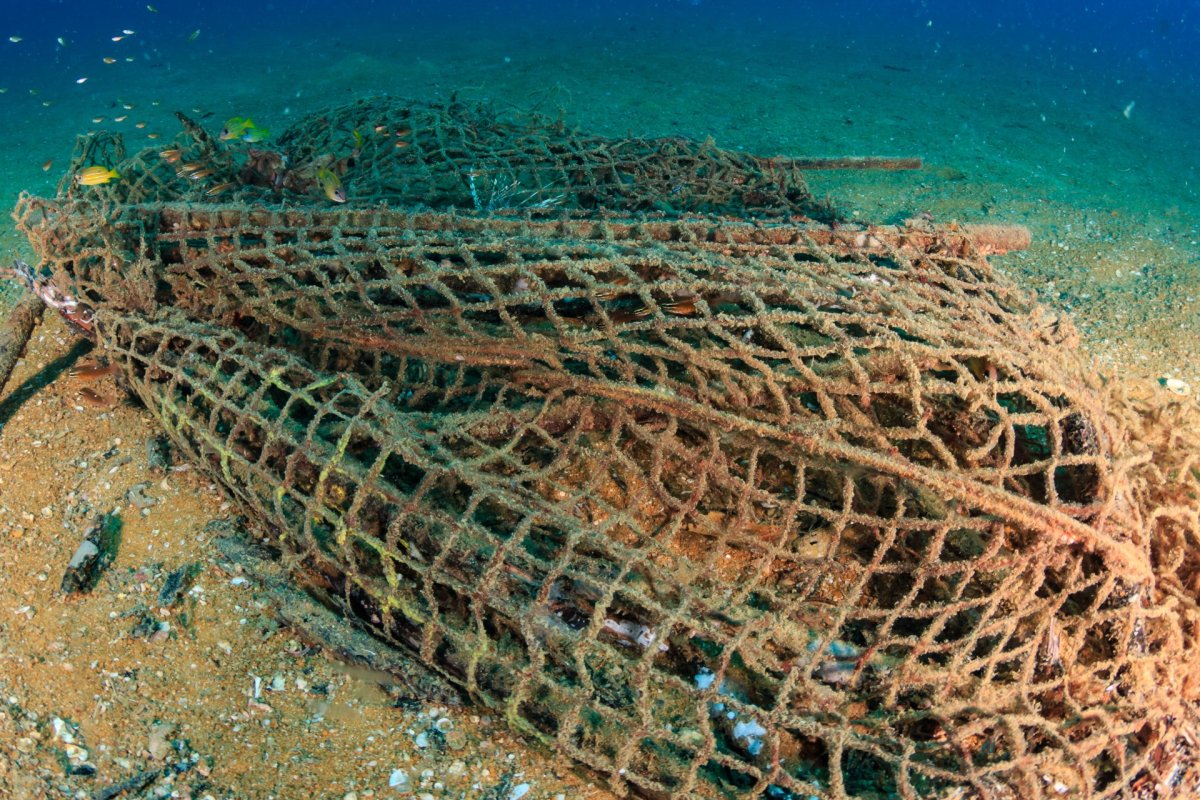 Abandoned ghost fishing nets on the sea floor/Shutterstock
The Marine and Freshwater Research Institute will host a two-day international workshop addressing marine litter originating from fishing activities, with particular attention to improving onboard waste-management practices in Arctic bottom-trawl fisheries. The workshop will bring together fisheries representatives, policymakers, researchers, non-governmental organizations, and technical experts to identify practical and regionally relevant approaches to reducing operational waste and preventing fishing-gear loss at sea.
Marine litter is a global concern and a persistent issue in the North Atlantic
Marine litter originating from fishing activities, including abandoned, lost or otherwise discarded fishing gear (ALDFG) and net and rope cutting waste, is a well-documented global concern and a persistent issue in the North Atlantic. Along Iceland’s coastline, fragments of plastic fishing gear continue to accumulate despite regular clean-up efforts. These shoreline findings indicate a broader presence of fishing-related debris in the marine environment, including the water column and seabed. Marine debris from ALDFG poses risks to marine ecosystems, including continued ghost fishing, entanglement of marine mammals and seabirds, and contributions to microplastic pollution. Strengthening onboard waste-management procedures and preventing gear loss are key elements of national and regional marine-litter mitigation strategies.
Within this broader international context, Iceland has established mandatory reporting systems for fishing-gear loss and has implemented Extended Producer Responsibility (EPR) mechanisms to facilitate collection and recycling. Reported gear losses, however, remain below expected volumes, limiting the basis for effective retrieval planning, and coordinated national retrieval operations have not yet been established. In Norway, long-running fishing-gear retrieval surveys, supported by systematic reporting by the fishing sector, provide an example of structured national approaches to addressing lost gear.
The workshop is organized and hosted by Iceland, Norway, the Kingdom of Denmark, and the Netherlands in collaboration with Wageningen Social & Economic Research, the Norwegian Directorate of Fisheries, the Norwegian Environment Agency, the Icelandic Environment and Energy Agency, the Icelandic Directorate of Fisheries, the Danish Environmental Protection Agency, and Aarhus University.