- EU projects
- Research
- Fish tagging
- Lumpfish research
- Oceanography
- Seabed mapping
- Arnarfjörður
- Drekasvæði
- Ísafjarðardjúp
- Jökulbanki
- Jökuldjúp
- Kolbeinseyjarhryggur and adjacent area
- Kolluáll
- Langanesgrunn
- Látragrunn
- Nesdjúp
- Reykjaneshryggur and adjacent area
- Selvogsbanki
- South of Selvogsbanki
- South of Skeiðarárdjúp
- South of Skerjadjúp
- Southeast of Lónsdjúp
- Southwest of Jökuldjúp
- Suðausturmið
- Suðurdjúp
- Vesturdjúp
- East of Reykjaneshryggur
- Vestfjardarmid
- Seal research
- Whale Research
- Advice
- About

A lot to be learned from fishing management in Iceland
11. February 2026
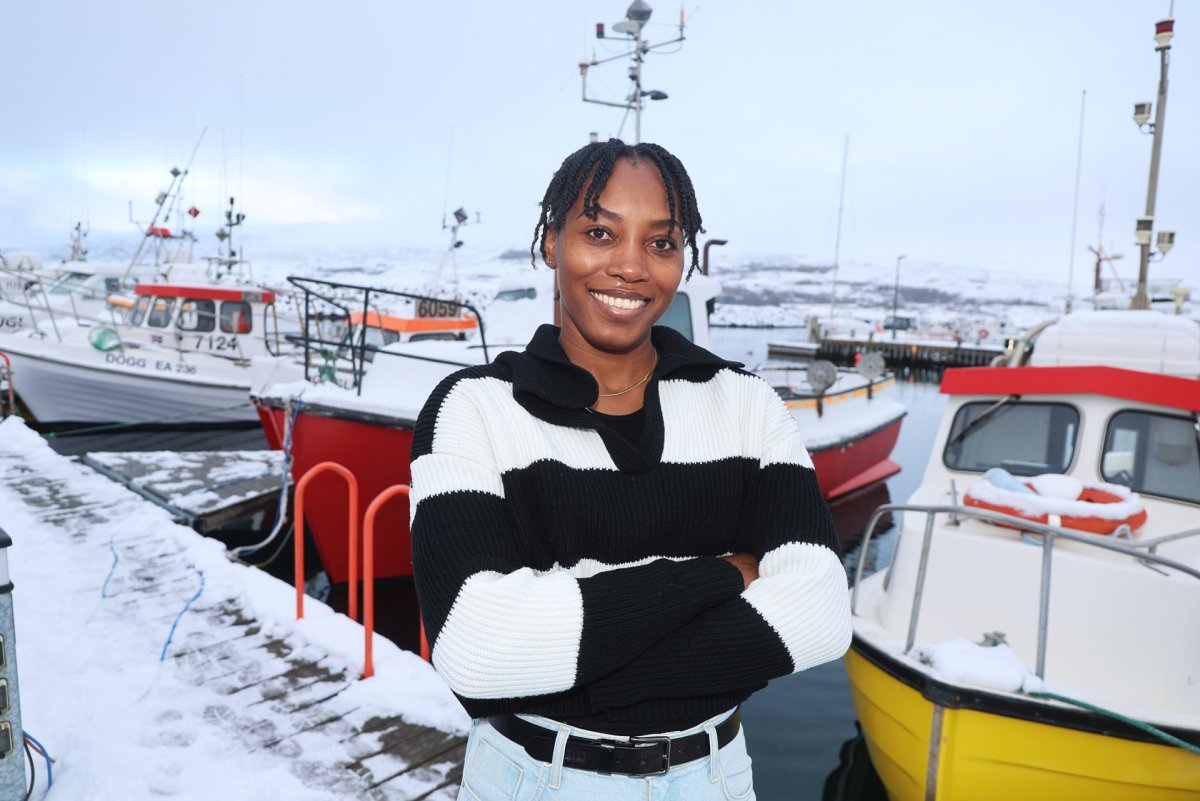 Annakay Crawford is currently in Akureyri participating in the specialization line of GRO fisheries policy and management, focusing on Iceland’s fisheries management system. Photo: Thorgeir Baldursson.
The theme of International Day of Women and Girls in Science (IDWGIS) 2026 is “Synergizing AI, Social Science, STEM* and Finance: Building Inclusive Futures for Women and Girls.”
It is therefore appropriate that we turn the spotlight on fisheries scientist Annakay Crawford, who is currently a fellow of the GRÓ Fisheries Training Programme.
The programme was established in 1998 through a trilateral agreement between the Icelandic Ministry for Foreign Affairs, the United Nations University (UNU), and the Marine and Freshwater Research Institute of Iceland (MFRI). Its headquarters are at MFRI’s facilities in Fornubudir, Hafnarfjordur in Iceland However, fellows of the Programme participate in a wide range of fisheries‑related projects across the country.
|
On this occasion, we asked Annakay Crawford to tell us a little about herself, why she chose to pursue a career in fisheries management, and what she hopes to gain from her participation in the GRÓ Programme. It is also fascinating to explore what these two island nations, Iceland and Jamaica have in common, as well as the key differences regardig fishing management. “I grew up in a small community called Waterford in the parish of St. Catherine, Jamaica. Strict and uncompromising upbringing shaped my childhood, which I believe played a key role in shaping the person I am today. I come from a blended family with one older sister and two younger brothers, and I am now a single mom with two children, Jayla (17) and Odane (13). I truly hope that my children will get the education they desire in the future and I actually have good reason to believe that this dream of mine will come true as they are excellent students. Education has always been important to me, and it was in fact the only thing I believed that could change my circumstances. I hold a B.Sc. in Public Policy and Management (Upper Second Class Honours) and am currently completing my MSc in International Policy and Development Management. My master's research focuses on Examining Fisheries Data Governance in the Caribbean, using Iceland and Norway for comparative analysis. To support my professional growth, I’ve also earned certificates in Project Management, Corporate and Strategic Planning, Supervisory Management, Administrative Management, and Business Writing Skills, all through the Management Institute for National Development, the Jamaican Government’s primary training institution.” Fisheries important to Jamaica´s developmentAnnakay says her academic journey began with a strong interest in public administration. “This interest was sparked during my time at the Ministry of Labour & Social Security where my supervisor, Mrs. Kennedy, both inspired me and introduced me to Public Sector Management. That early exposure led me to pursue a B.Sc. in Public Policy and Management, then my M.Sc. Hopefully, I will start a PhD in Public Administration in relation to fishery management in near future. My interest in fisheries emerged in 2018 during the transition of the Fisheries Division to the National Fisheries Authority where greater control offishery management in the Jamaican public sector was made possible. At the time, I served as Executive Assistant to the CEO, which allowed me to participate in high‑level policy discussions and decision‑making processes. This firsthand exposure opened my eyes to the critical role fisheries play in Jamaica’s coastal livelihoods, food security, and overall national development.” She says that after she progressed academically, she began aligning her school assignments with fisheries-related topics. “This deepened my appreciation for the sector and helped me critically examine its challenges and opportunities. Some of my academic work includes: a research proposal exploring the perspectives of Jamaican fishers, policymakers, and environmental NGOs on sustainable fisheries and the blue economy, a national digital transformation strategy for the fisheries sector, a paper examining how technology and innovation can support fisheries and aquaculture, a blog article on emerging technologies and their potential role in improving government services in the Caribbean, and an analytical essay on zoning laws and their impact on coastal communities in Negril and Montego Bay and more. These experiences shaped and strengthened my commitment to fisheries management and public administration.” |
20th Session of the Western Central Atlantic Fishery Commission.
Blue Justice Initiative Mission To anchor coordinated national and regional UNDP support on addressing fisheries crime in Jamaica and in broader.
|
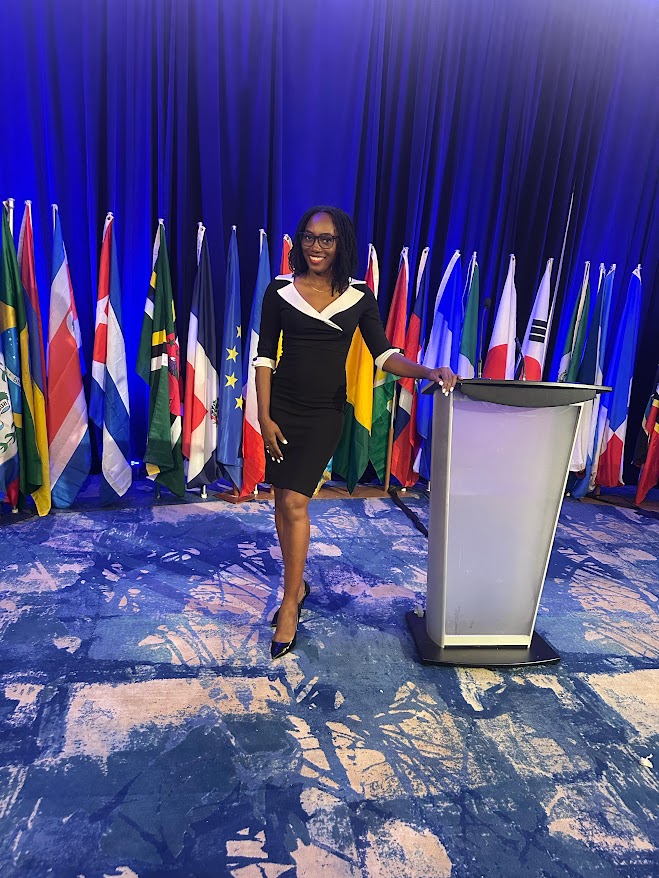
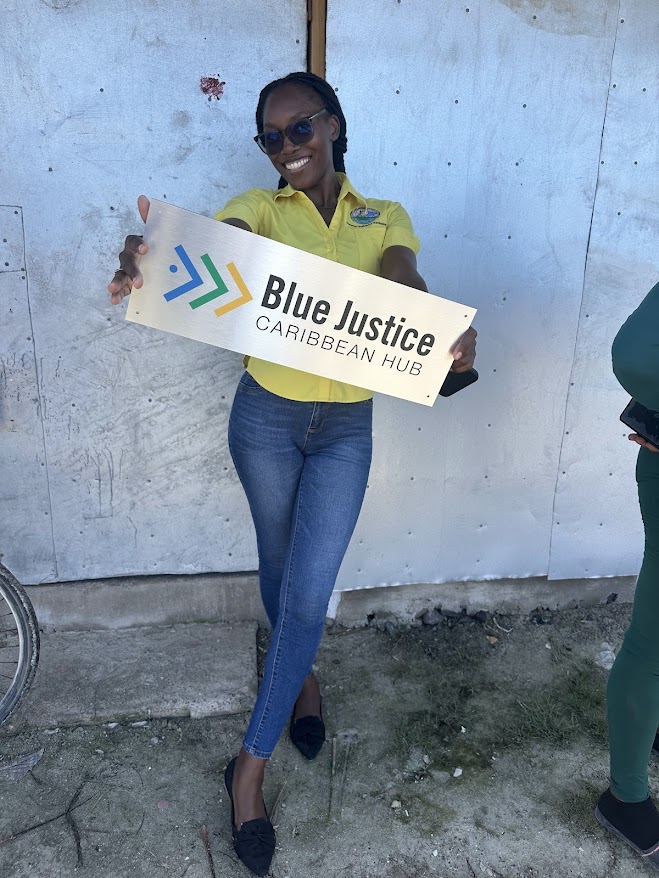
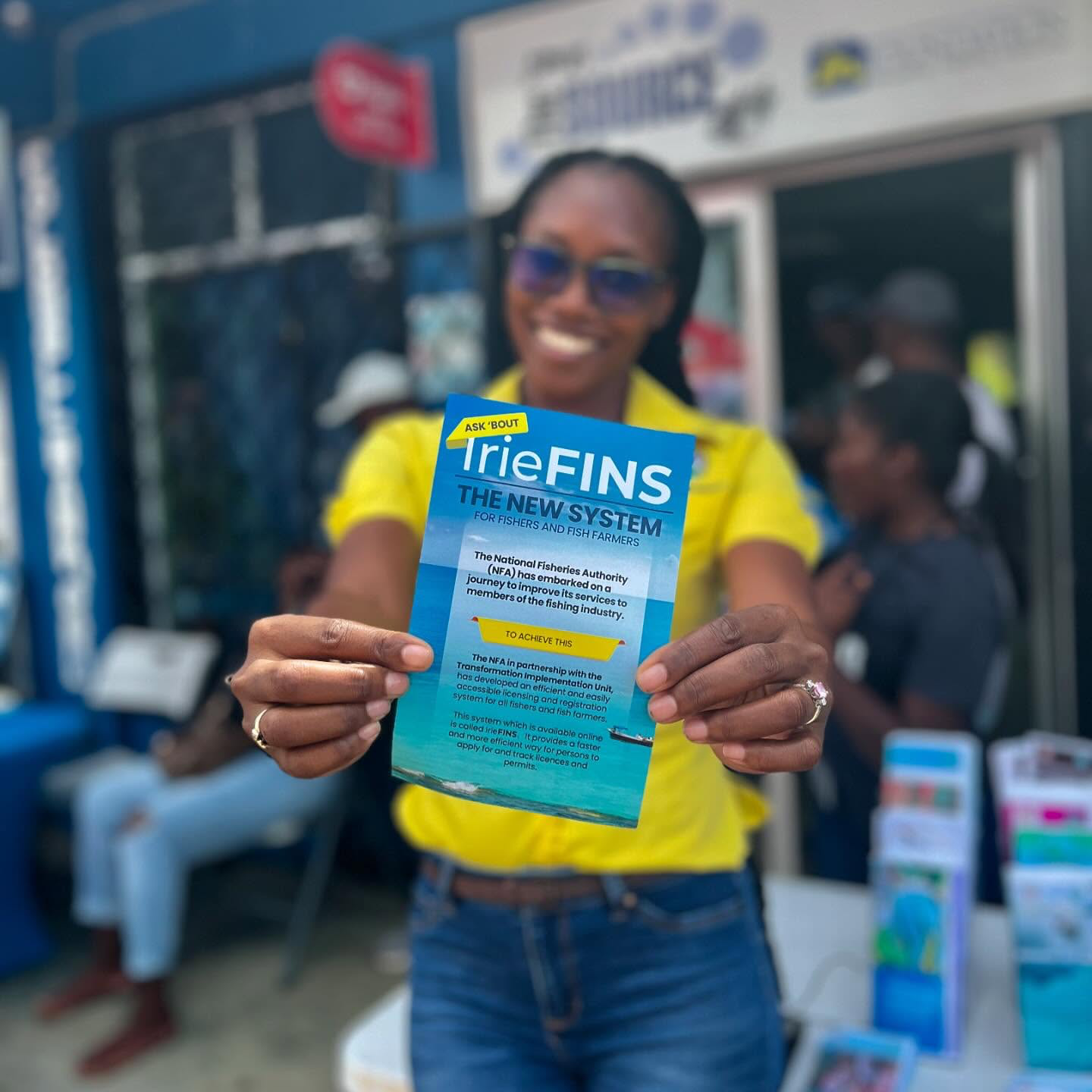 Stakeholder Consltation and promotion of online platform.
Being a Woman in the Field of Fisheries
Annakay says that working in public administration and fisheries as a woman has had its challenges. She began her career as a secretary and progressed into senior technical and leadership roles at a young age, but it required persistence and confidence.
“I have been fortunate, however, to work with various leaders who supported my growth within the Jamaican public sector. Their trust helped me to continue to contribute meaningfully to policy development and governance. While the journey has not always been easy, my dedication to improving Jamaica’s fisheries sector and supporting the communities that depend on it has always outweighed any challenges I’ve faced.”
Weak data governance is the biggest challenge
One of the most significant challenges in the Jamaican fisheries management is weak data governance. When data collection, verification, reporting, and management systems are inconsistent or incomplete, it becomes difficult to craft evidence-based policies.
Poor data weakens therefore stock assessments, hampers the monitoring of IUU** fishing and makes it hard to design responsive management measures. Annakay believes that strengthening data governance is therefore essential if Jamaica is to improve sustainability, regulatory oversight, enforcement, and long-term sector planning.
“My participation in the GRÓ Fisheries Programme has been incredibly valuable. On top of the regular programme in Hafnarfjordur we have site visits to organizations such as Matís, processing plants, landing sites, and institutions across the value chain have helped me understand how a well-organized and fully integrated fisheries system operates.
And so combined with my master’s research—using Iceland as a comparative case—this experience has broadened my perspective on what is possible in Jamaica. I hope to use this knowledge to find ways to promote better data governance practices when I get back home to and to strengthen policy development through evidence-based approaches. I am particularly passionate about helping fishers recognize opportunities beyond survival-based fishing, including entrepreneurship and value chain participation.”
Similarities but also differences between Iceland and Jamaica
“The biggest difference between these two islands Iceland and Jamaica, when it comes to fisheries management lie in governance and the value placed on the resource. In Iceland, fisheries are treated as a national asset requiring strict protection and has been so for many decades. This means that the law, institutions, enforcement systems, reporting structures, and data analysis frameworks are well aligned. Management decisions are grounded in science, and the industry itself supports strong regulatory action when needed—because everyone understands the economic and social stakes.
In Jamaica however, while the sector is regulated, governance structures are more fragmented and often rely on personal relationships, tradition, and goodwill. The link between law, institutions, and data is weaker, and many stakeholders do not yet fully appreciate the long‑term economic value of fisheries.”
There is obviously work to be done for ambitious Annakay Crawford when she gets back home to Jamaica with her head full of new knowledge and ideas about ways to improve data governance for fisheries in her home country.
__________________________________________
*STEM: Science, Technology, Engineering and Mathematics
**IUU: Illegal, Unreported and Unregulated fishing