- EU projects
- Research
- Fish tagging
- Lumpfish research
- Oceanography
- Seabed mapping
- Arnarfjörður
- Drekasvæði
- Ísafjarðardjúp
- Jökulbanki
- Jökuldjúp
- Kolbeinseyjarhryggur and adjacent area
- Kolluáll
- Langanesgrunn
- Látragrunn
- Nesdjúp
- Reykjaneshryggur and adjacent area
- Selvogsbanki
- South of Selvogsbanki
- South of Skeiðarárdjúp
- South of Skerjadjúp
- Southeast of Lónsdjúp
- Southwest of Jökuldjúp
- Suðausturmið
- Suðurdjúp
- Vesturdjúp
- East of Reykjaneshryggur
- Vestfjardarmid
- Seal research
- Whale Research
- Advice
- About

Commercial seaweed harvesting may affect coastal fish communities
21. August 2025
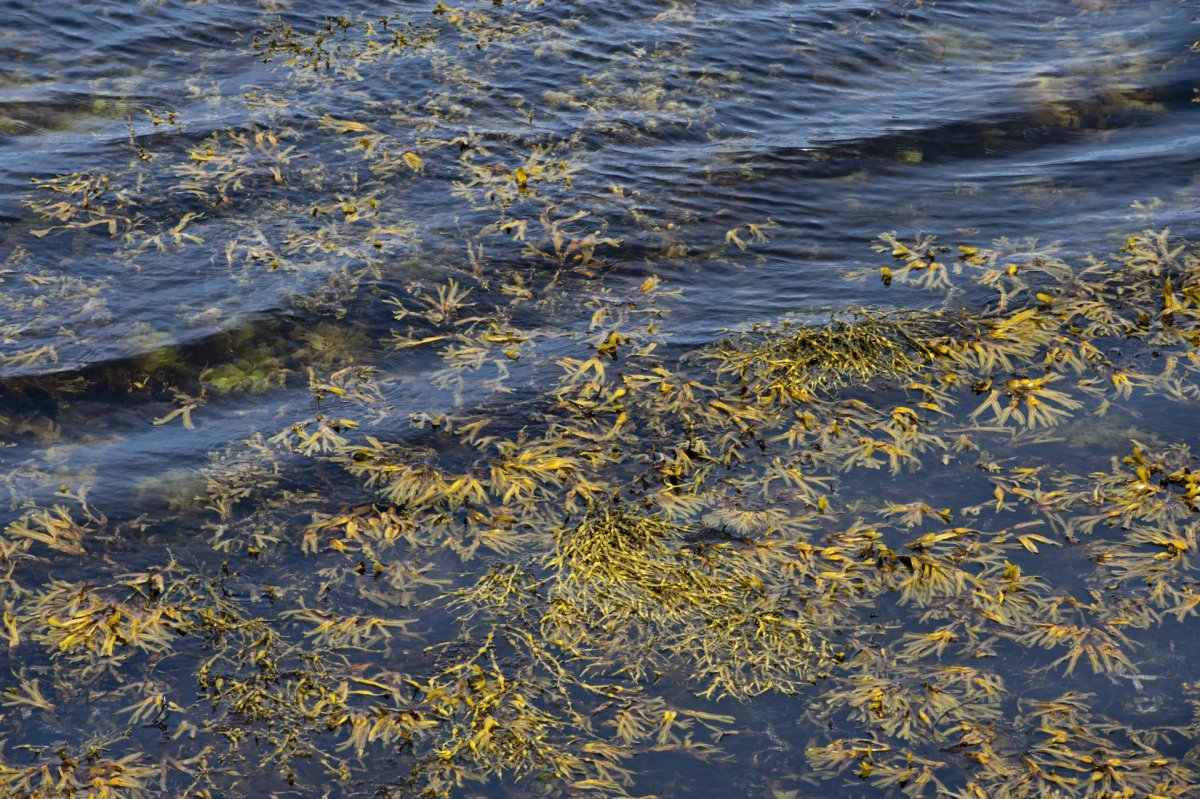
A new study, published in Journal of the Marine Biological Association of the United Kingdom, sheds light on how commercial seaweed harvesting may be affecting coastal fish communities.
In the sheltered intertidal zones of Breiðafjörður bay, researchers set out multi-mesh nets within the knotted wrack (Ascophyllum nodosum) stands to track seasonal changes in fish populations. Over the course of a year, they were able to identify nine fish species, with Pollachius virens (saithe), Gadus morhua (cod), and Myoxocephalus scorpius (sculpin) among the most common. The young gadoids were especially abundant in summer, suggesting that the area serves as a nursery ground.
To understand the effects of seaweed harvesting, the researchers compared fish communities from harvested and unharvested plots. While overall impacts appeared to be minimal, cod was significantly larger in control areas, and fish in harvested zones had more varied diets, which could hint at subtle changes in trophic dynamics. The findings highlight the ecological importance of A. nodosum habitats and support a precautionary approach to seaweed harvesting, especially given the nursery role these areas play for commercially valuable fish.
Abstract from the research:
"In Iceland, sheltered rocky intertidal zones like Breiðafjörður bay are dominated by monospecific stands of Ascophyllum nodosum, providing key habitats for marine organisms. Increasing demand for A. nodosum has led to its commercial exploitation, yet impacts on fish assemblages remain poorly known.
Using a novel multi-mesh netting approach, researchers characterised seasonal patterns in fish composition, abundance, size structure, age, and diet. Additionally, to assess the local effects of seaweed harvesting, commercial harvesting was conducted, with comparisons being made between treatment and control unharvested areas during different seasons.
Nine fish species were identified, with Pollachius virens, Myoxocephalus scorpius, and Gadus morhua being the most common. Fish abundance peaked in summer, and declined the following spring, suggesting cohort turnover with juvenile gadoids relying on these habitats as nurseries. P. virens showed increased length through seasons, whereas no trends in length or abundance were observed for M. scorpius.
Effects of seaweed harvesting were minimal, although fish diversity was slightly higher and G. morhua significantly larger in control plots. Stomach contents exhibited a greater diversity of prey types in harvested sites, suggesting potential impacts on trophic dynamics. These findings underscore the importance of A. nodosum-dominated habitats as nursery grounds for commercially valuable gadoids and highlight the need for a precautionary approach to seaweed harvesting to maintain ecosystem health