- EU projects
- Research
- Fish tagging
- Lumpfish research
- Oceanography
- Seabed mapping
- Arnarfjörður
- Drekasvæði
- Ísafjarðardjúp
- Jökulbanki
- Jökuldjúp
- Kolbeinseyjarhryggur and adjacent area
- Kolluáll
- Langanesgrunn
- Látragrunn
- Nesdjúp
- Reykjaneshryggur and adjacent area
- Selvogsbanki
- South of Selvogsbanki
- South of Skeiðarárdjúp
- South of Skerjadjúp
- Southeast of Lónsdjúp
- Southwest of Jökuldjúp
- Suðausturmið
- Suðurdjúp
- Vesturdjúp
- East of Reykjaneshryggur
- Vestfjardarmid
- Seal research
- Whale Research
- Advice
- About

MFRI issues capelin TAC advice
10. October 2025
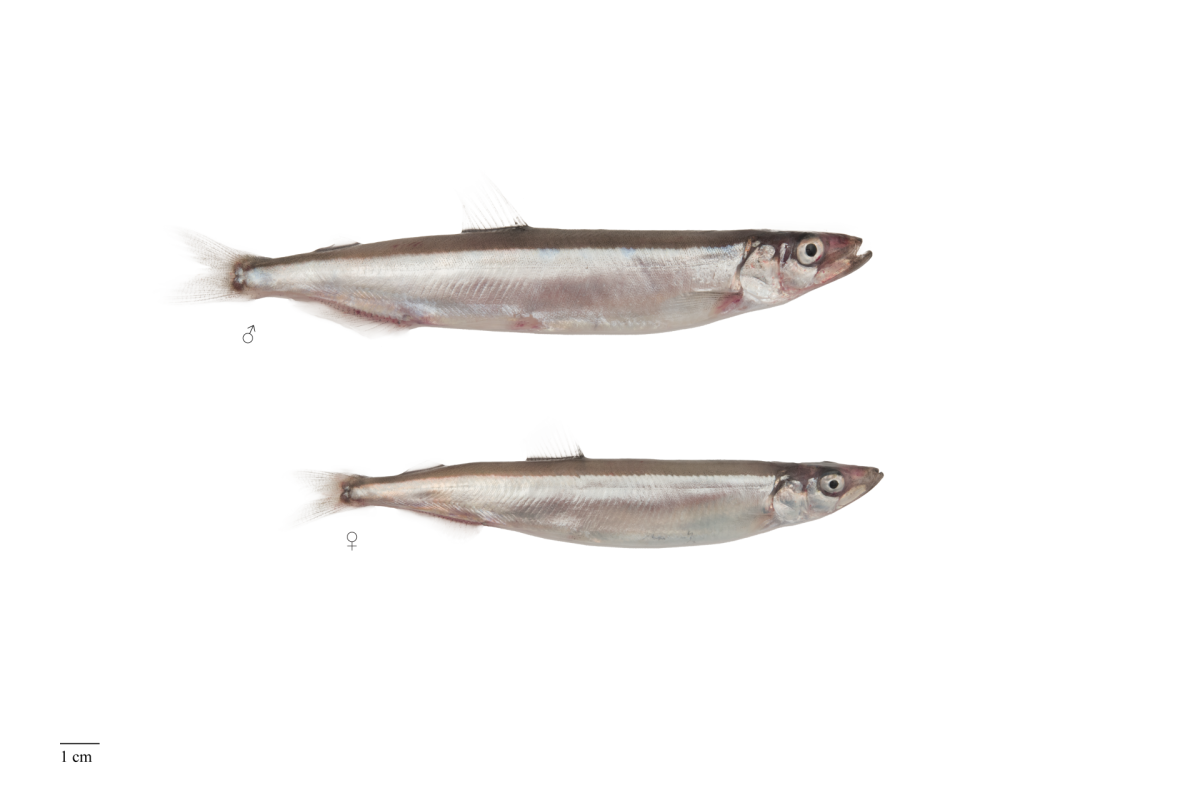 Capelin. Photo: Svanhildur Egilsdóttir.
Based on acoustic surveys conducted on r/v-s Árni Friðriksson and Tarajoq earlier this autumn and the accepted harvest control rule (HCR), capelin TAC should not exceed 43 766 tonnes in the fishing year 2025/26. This TAC corresponds well with previously released initial advice based on the juvenile capelin index in autumn 2024. The new advice will be revisited after the results of acoustic surveys of the mature and harvestable stock become available in early 2026.
The surveys were conducted from 23 August to 22 September 2025 (Figure 1, below). The extent of the survey tracks is considered to have covered the distribution of the stock. The capelin were relatively evenly distributed and the measurements had a low CV.
The total amount of capelin is estimated 1 209 thous. tonnes, of which the maturing capelin were 418 thous. tonnes. The results of acoustic measurements and predation model runs indicate that a catch of 65 650 tonnes would achieve the goal of the HCR to leave with 95% probability a minimum 114 thous. tonnes of capelin to spawn after fishing. As a precautionary measure (according to a revision of the HCR first applied now) the intemediate advice issues two thirds of that amount, or 43 766 tonnes.
The juvenile index estimate from the autumn 2025 survey is 119 billion individuals, the fifth highest on record, indicating the 2024 year class (spawned in spring 2024) is large, or the same order of magnitude as the 2019 year, which contributed to the large capelin seasons in 2021/22 and 2022/23. These results will form the basis of initial advice for the fishing season 2026/27 which ICES will issue in June 2026.
Advice 10 October 2025 for capelin is here.
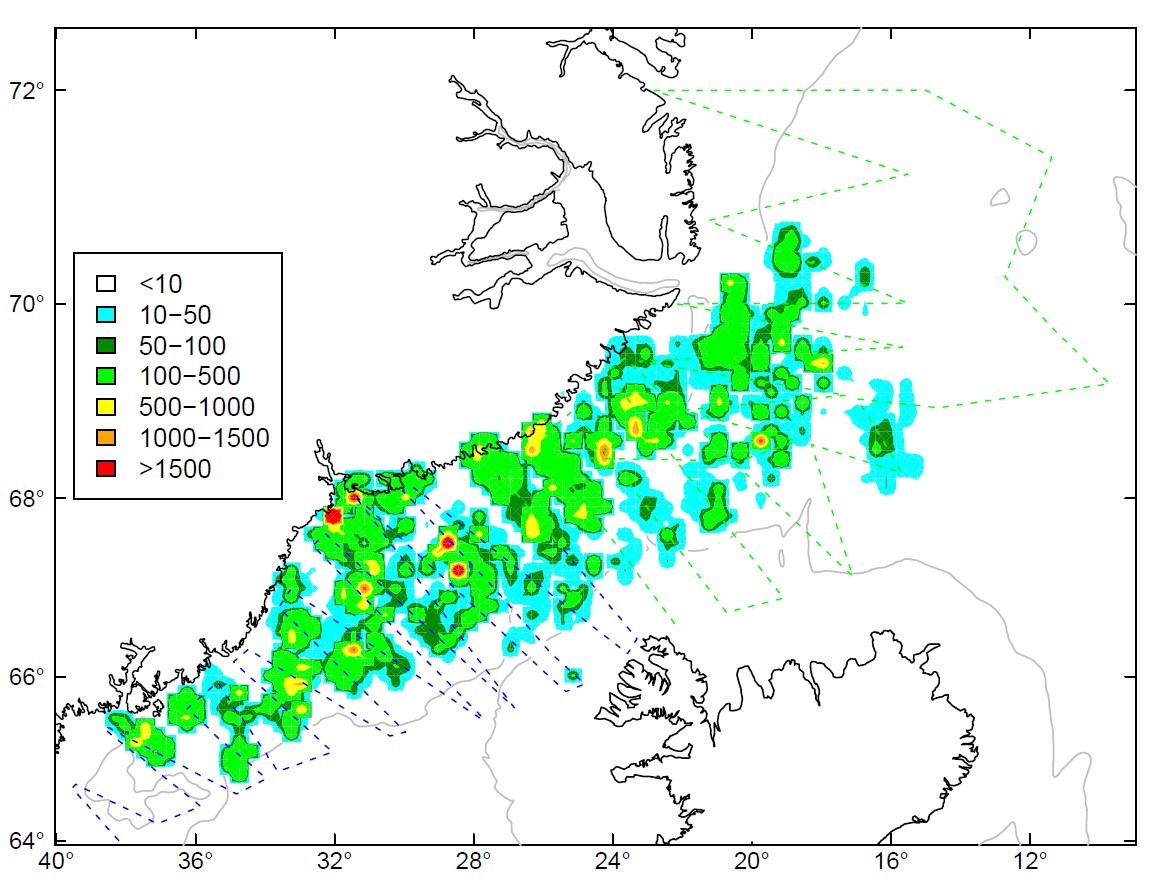
Figure 1. The survey tracks of RV Tarajoq (blue) and Árni Friðriksson (green) during August and September 2025 as well as the distribution of capelin based on acoustic measurements.