- EU projects
- Research
- Fish tagging
- Lumpfish research
- Oceanography
- Seabed mapping
- Arnarfjörður
- Drekasvæði
- Ísafjarðardjúp
- Jökulbanki
- Jökuldjúp
- Kolbeinseyjarhryggur and adjacent area
- Kolluáll
- Langanesgrunn
- Látragrunn
- Nesdjúp
- Reykjaneshryggur and adjacent area
- Selvogsbanki
- South of Selvogsbanki
- South of Skeiðarárdjúp
- South of Skerjadjúp
- Southeast of Lónsdjúp
- Southwest of Jökuldjúp
- Suðausturmið
- Suðurdjúp
- Vesturdjúp
- East of Reykjaneshryggur
- Vestfjardarmid
- Seal research
- Whale Research
- Advice
- About

Graduation from the GRÓ Fisheries Training Programme
27. May 2026
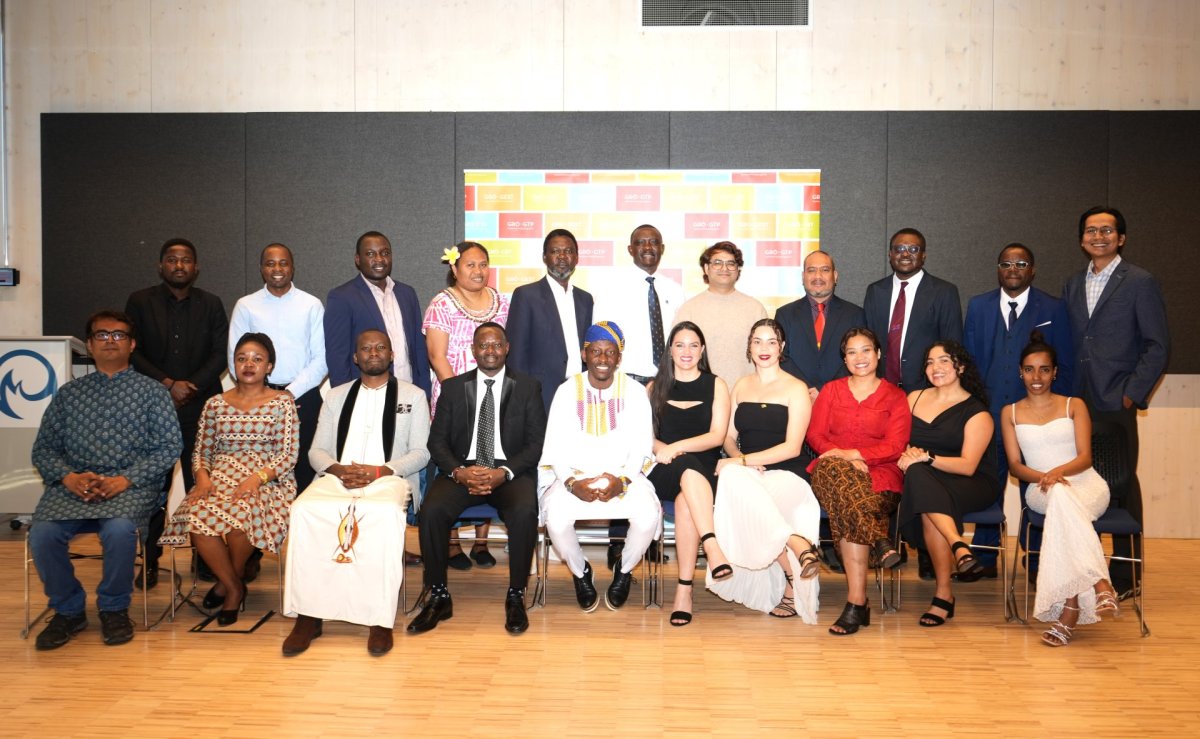
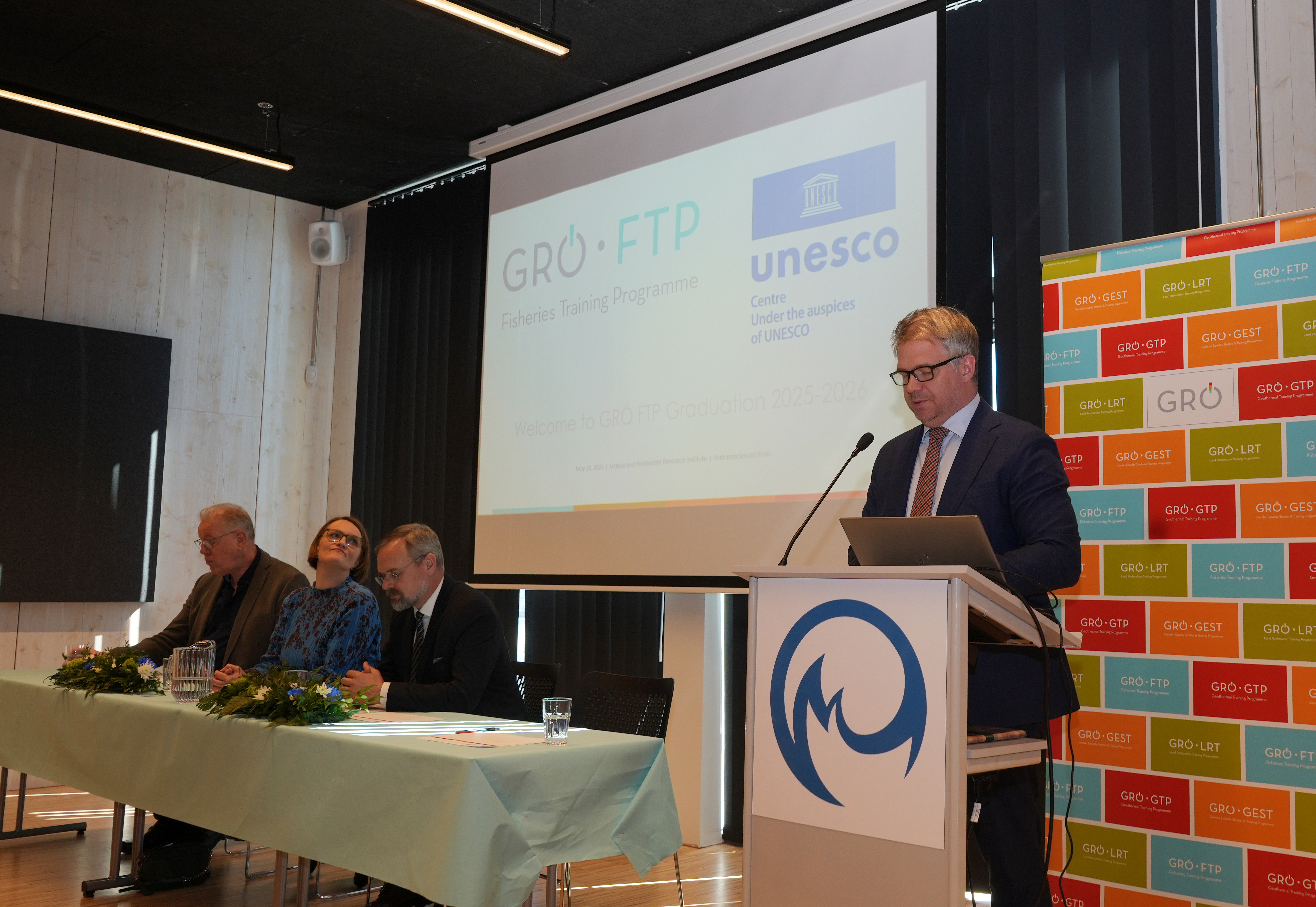
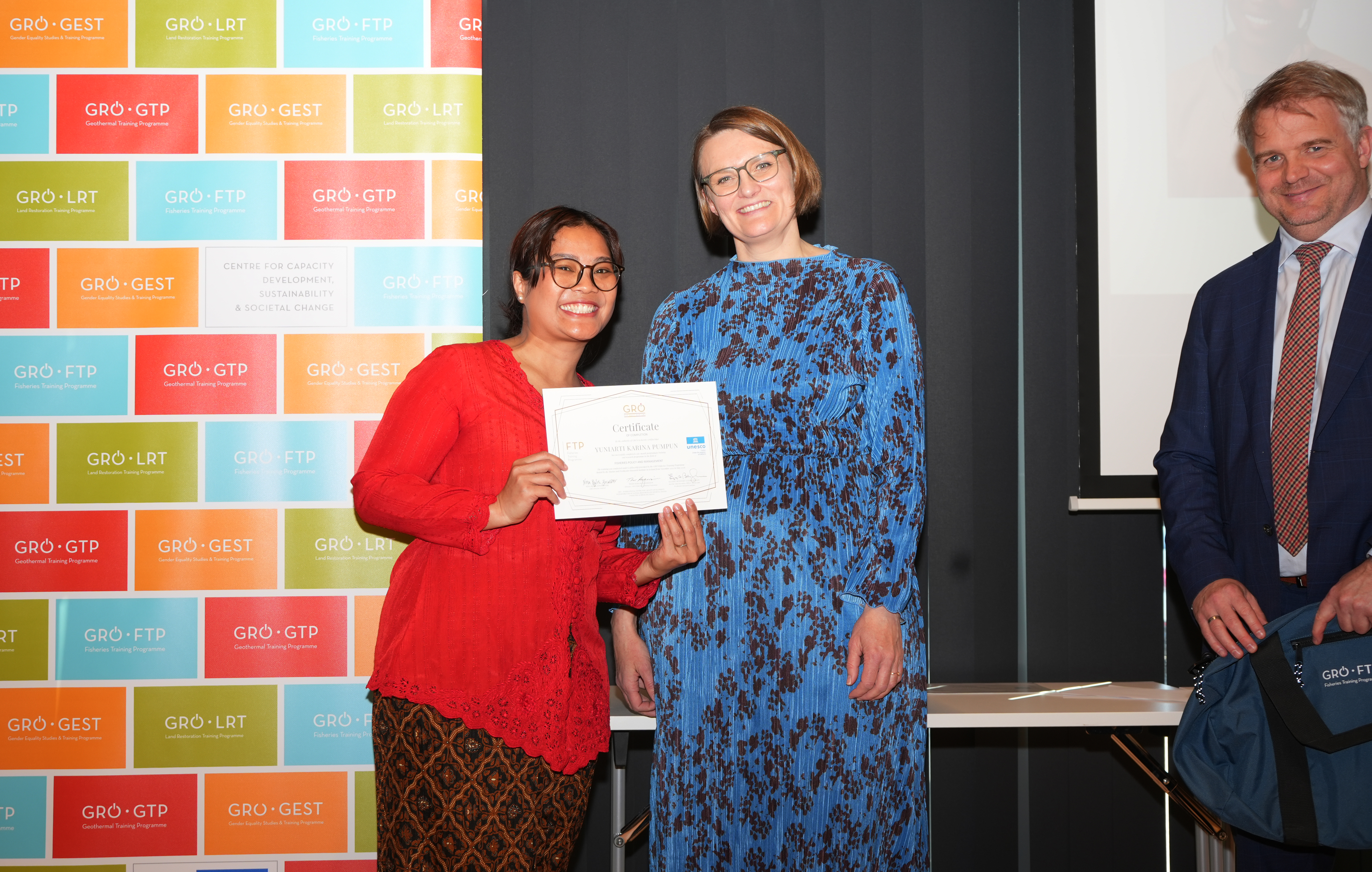
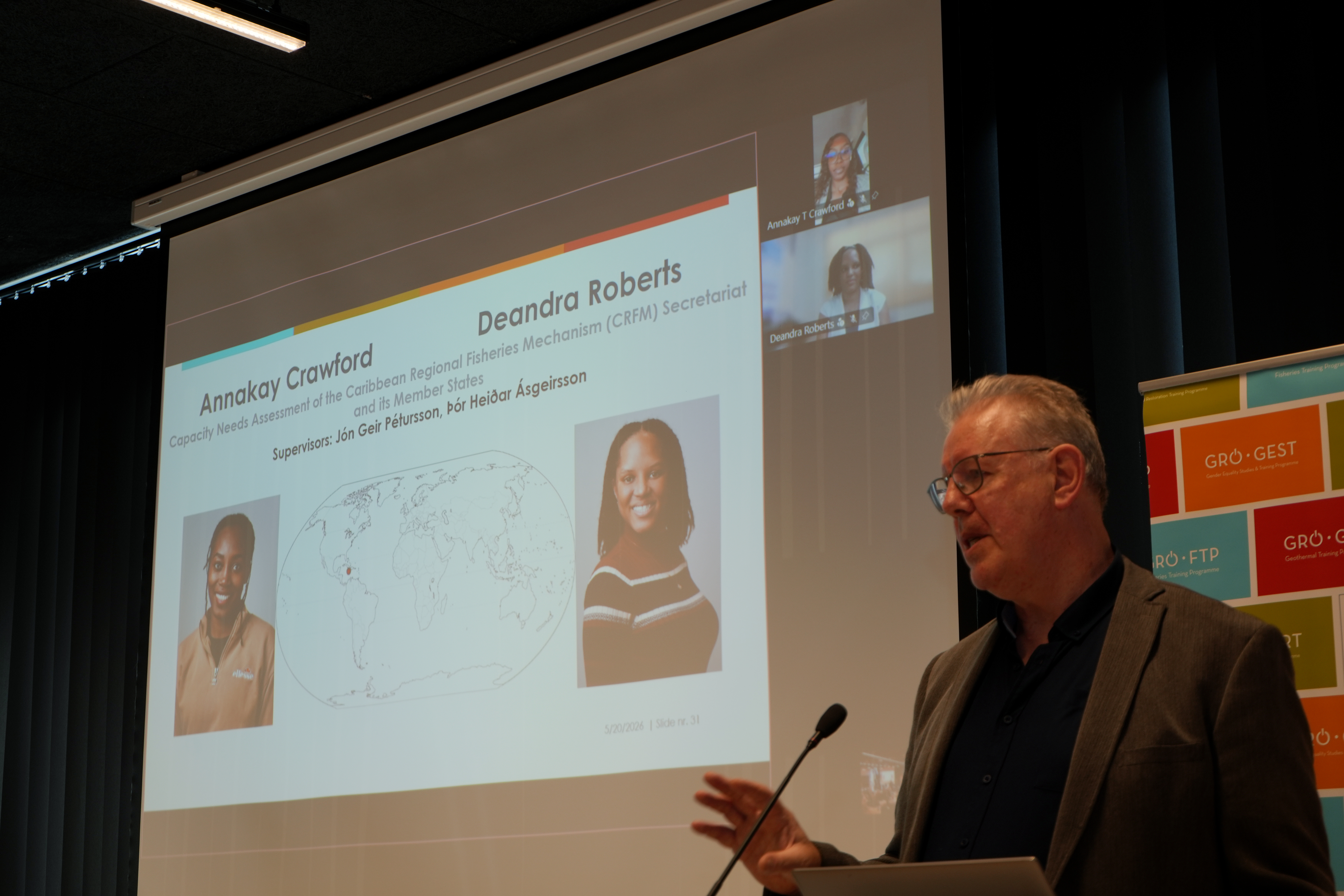
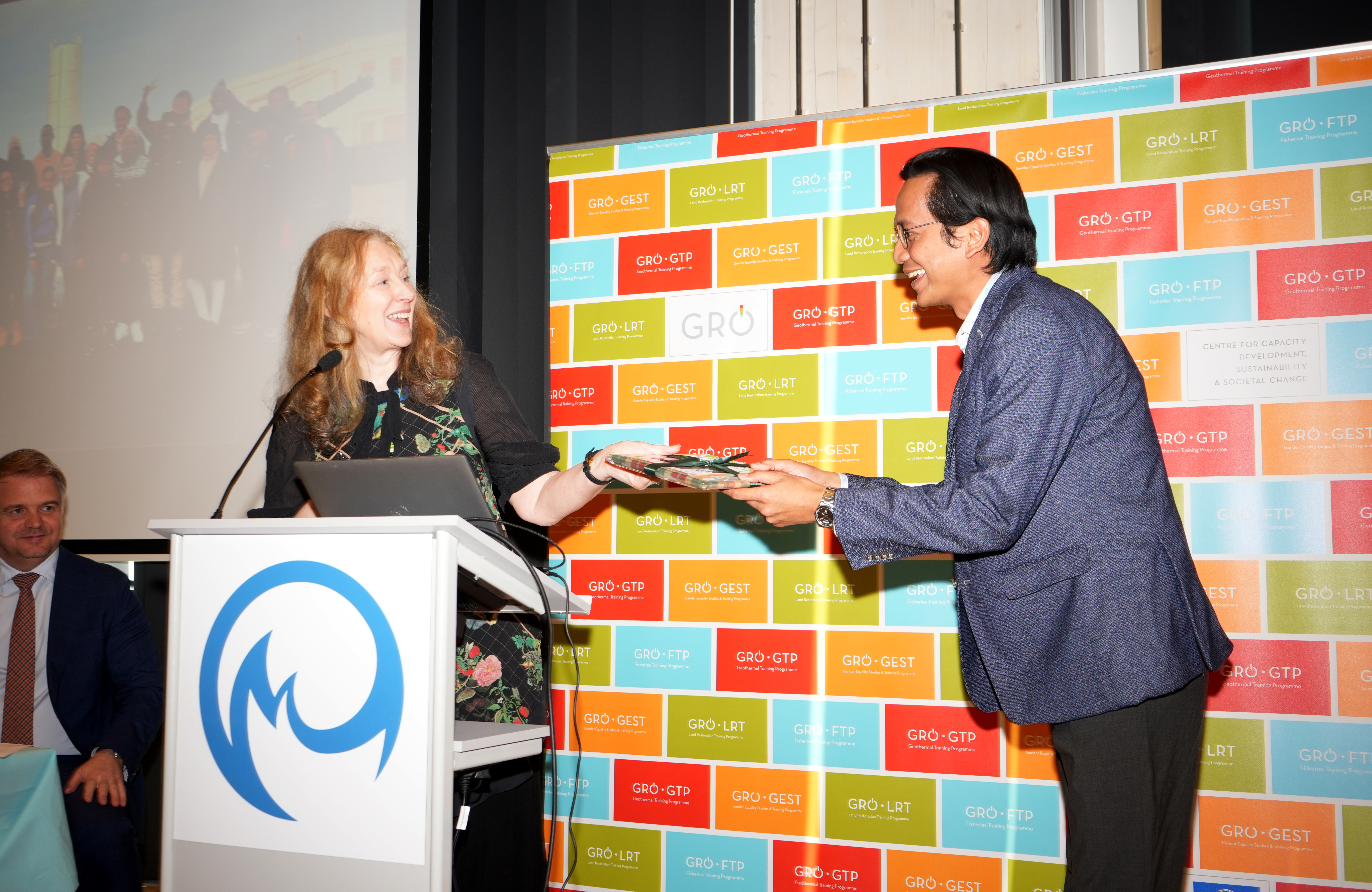 On Wednesday, May 20, twenty-three fellows graduated from the GRÓ Fisheries Training Programme after completing a six-month training course offered by the Icelandic government as part of its international development cooperation efforts.
This year's cohort included 14 men and 9 women, representing 15 countries: Panama, Cuba, Jamaica, St. Vincent, Ghana, Sierra Leone, Liberia, Malawi, Uganda, Tanzania, Kenya, India, Indonesia, Papua New Guinea, and the Solomon Islands.
With the fellows who graduated today, altogether 535 fellows from developing countries have completed the training course in Iceland since it was first offered in 1998.
Amongst the guests who attended the ceremony was the Indian ambassador to Iceland, His Excellency Mr. R. Ravindra.
Jónas Páll Jónasson, Head of Demersal Division, MFRI, welcomed guests and served as master of ceremonies at the event.
Daði Már Kristófersson, Minister of Finance and Economic Affairs, addressed the gathering and warmly congratulated the fellows on their achievements. He reflected briefly on his more than twenty years of involvement with the GRÓ FTP as a lecturer in fisheries economics and as a supervisor to over 30 fellows. He highlighted Iceland’s transformation during the 20th century from one of Europe’s poorest countries to among its wealthiest, emphasising the central role of the fisheries sector in this progress and the importance of sharing Iceland’s experience with countries endowed with significant fisheries resources.
In her address, Nína Björk Jónsdóttir, Director General of the GRÓ Centre for Capacity Development, noted that although the centre was established only six years ago, it builds on the strong foundations of four long-standing programmes -- GTP, FTP, LRT and GEST -- which previously operated under the United Nations University. Bringing these programmes together under one umbrella has strengthened their collaboration and alignment with Iceland’s development cooperation efforts. She also referred to recent GRÓ outreach events highlighting the impact of the four GRÓ training programmes, including testimonials from former fellows demonstrating their contributions to policy, research, and know how in their home countries. She concluded by congratulating the graduating fellows and thanking GRÓ staff for their continued dedication.
Kellishia George from Saint Vincent and the Grenadines spoke on behalf of the graduating fellows. Reflecting on their journey as Cohort 27 since their arrival in November 2025, she described how they began uncertain of expectations but, through six months of hard work, challenges and breakthroughs, grew into a more disciplined, confident and resilient group. She highlighted how the programme provided space to grow and learn in a supportive environment. On behalf of the fellows, she expressed sincere thanks to the GRÓ team, heads of line, lecturers and supervisors, and thanked Iceland for its commitment to fisheries development.
Þór Heiðar Ásgeirsson, Director of the GRÓ Fisheries Training Programme, presided over the presentation of graduation certificates and, in his closing remarks, emphasised the increased attention paid to communication skills in the programme (through practical sessions, oral presentations, report writing and poster design). He reminded the fellows that the true impact of their work will depend on how effectively they communicate their findings upon returning home. He also expressed sincere gratitude to the many individuals, institutions and organisations whose contributions form the backbone of the programme. In closing, he paid special tribute to Margeir Gissurarson, who is retiring after many years of dedicated service, during which he has played a key role as head of the Quality Management of Fish Handling and Processing line, as well as a lecturer, supervisor and organiser of in-country courses.
At the end of the ceremony, Julie Ingham, Deputy Director of GRÓ-FTP, announced the winner of the best poster award, Mr Prehadi from Indonesia. A poster exhibition showcasing the research project of all the fellows was concurrently on display at the graduation venue.
Jónas Páll Jónasson, master of ceremonies, brought proceedings to a close with warm wishes for the fellows’ safe journey home, after which guests were invited to a reception.