- EU projects
- Research
- Fish tagging
- Lumpfish research
- Oceanography
- Seabed mapping
- Arnarfjörður
- Drekasvæði
- Ísafjarðardjúp
- Jökulbanki
- Jökuldjúp
- Kolbeinseyjarhryggur and adjacent area
- Kolluáll
- Langanesgrunn
- Látragrunn
- Nesdjúp
- Reykjaneshryggur and adjacent area
- Selvogsbanki
- South of Selvogsbanki
- South of Skeiðarárdjúp
- South of Skerjadjúp
- Southeast of Lónsdjúp
- Southwest of Jökuldjúp
- Suðausturmið
- Suðurdjúp
- Vesturdjúp
- East of Reykjaneshryggur
- Vestfjardarmid
- Seal research
- Whale Research
- Advice
- About

New York Times article on Atlantic Meridional Overturning Circulation
16. December 2025
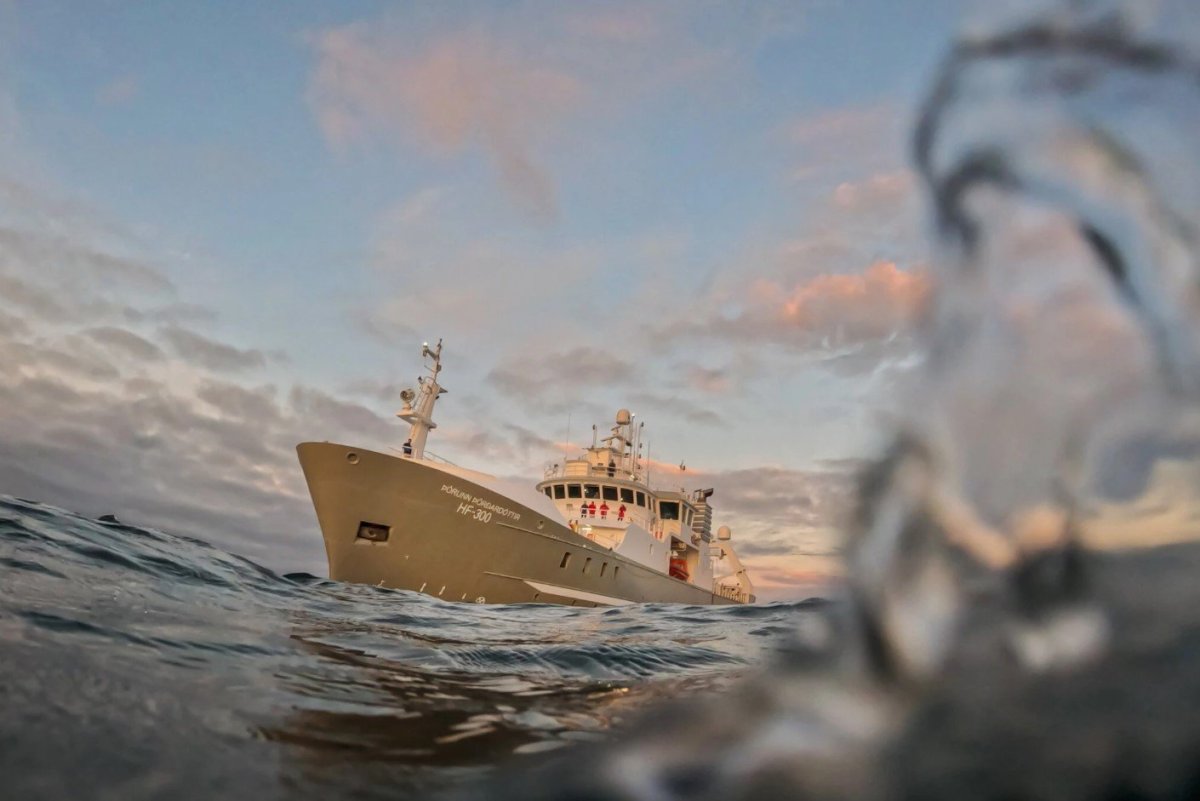 The research vessel Þórunn Þórdardóttir HF300 on its way to Greenland in rough seas off Snæfellsnes, West Iceland.
The New York Times recently published an article about an expedition on the research vessel Þórunn Þórdardóttir and changes in the Atlantic Meridional Overturning Circulation (AMOC).
In September, a group of scientists from the United States and Iceland sailed to the east coast of Greenland to monitor the AMOC, which controls the distribution of heat in the North Atlantic and affects climate worldwide. Concerns are that this circulation will slow down or stop with increased freshwater from ice melting in Greenland and the Arctic Ocean.
In the international research project East Greenland NOrdic Seas Gateway (EGNOG), the freshwater in the East Greenland Current is being investigated to answer whether AMOC is approaching a tipping point that will cause widespread climate changes.
However, few data on freshwater fluxes from this area exists, where sea ice, icebergs and the weather make access difficult for most parts of the year. During the expedition on Þórunn Þórðardóttir, the researchers and the crew carried out extensive measurements, with CTD, water sampling for the analysis of trace elements in the sea, and acoustic doppler current profilers. Additionally, several moorings were deployed on the seafloor that will monitor the current and fresh water for one entire year.
Journalist Raymond Zhong and photographer Esther Horvath, both from the New York Times, participated in the expedition. The article features insights into the overturning circulation, climate change and the expedition aboard Þórunn Þórdardóttir.
The article is here (note, that the NYT is a subscription website).
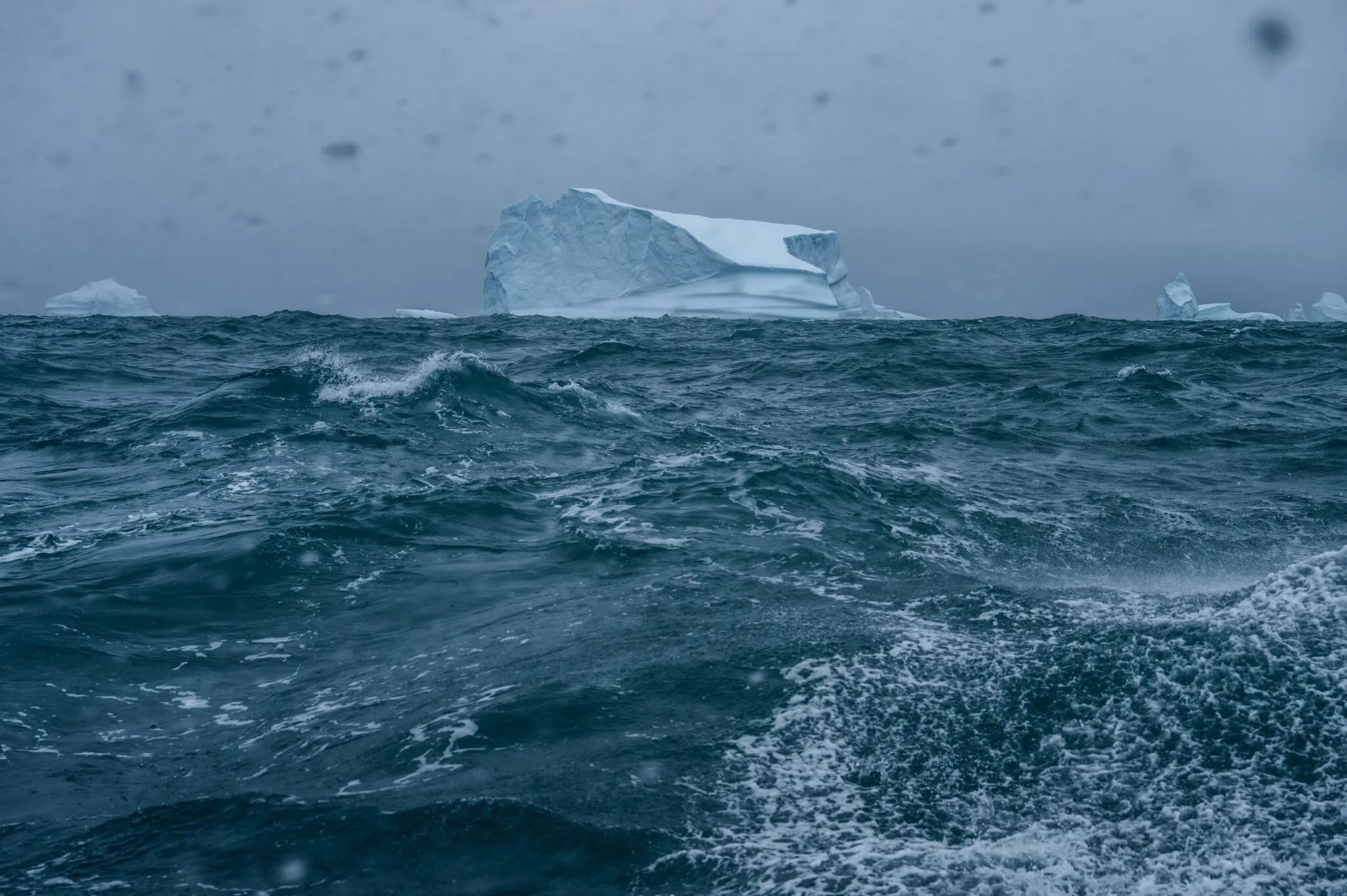
Iceberg on the east coast of Greenland
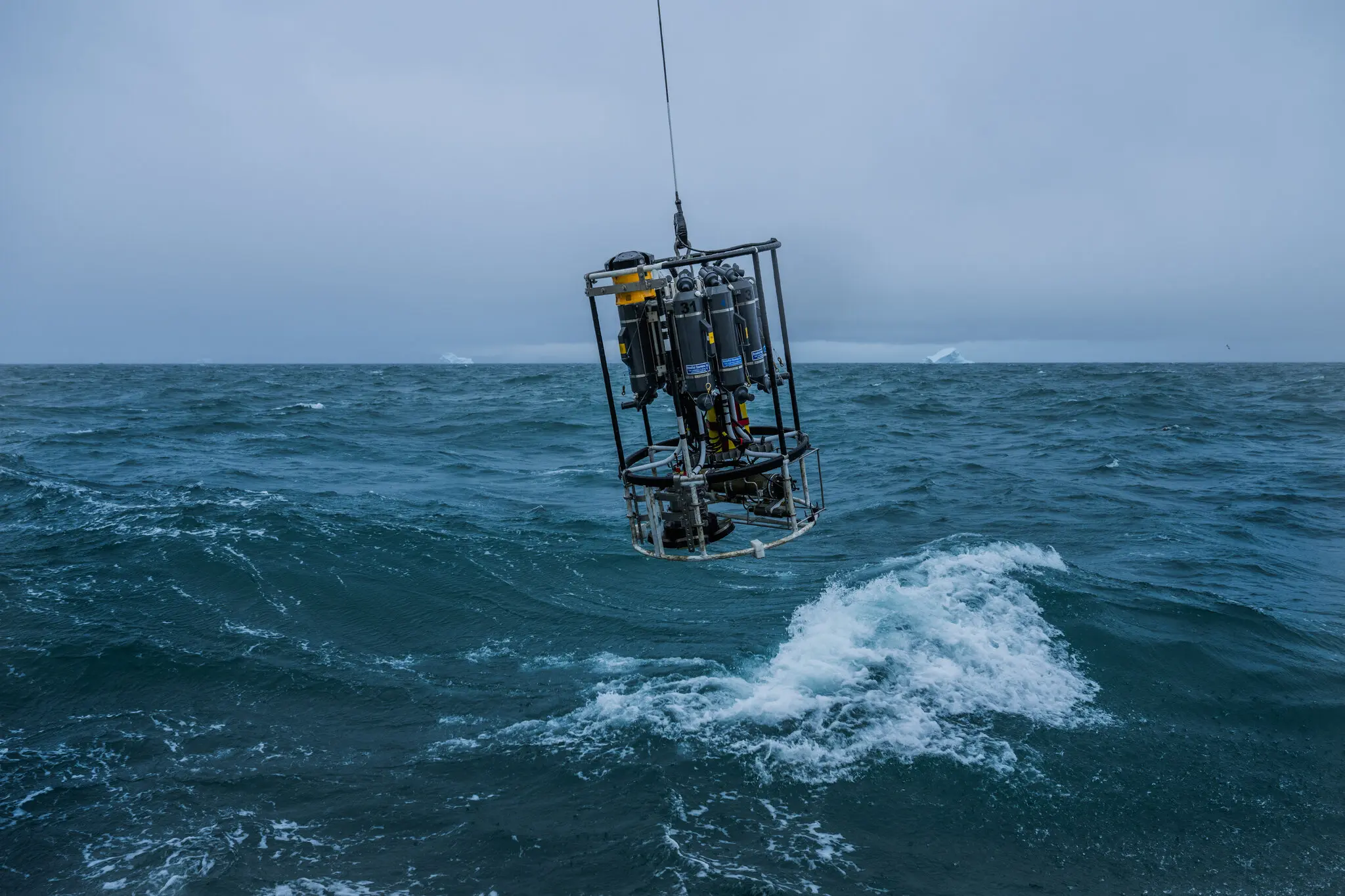
A CTD (conductivity-temperature-depth) probe is lowered into the sea to measure temperature and salinity and to collect water samples.
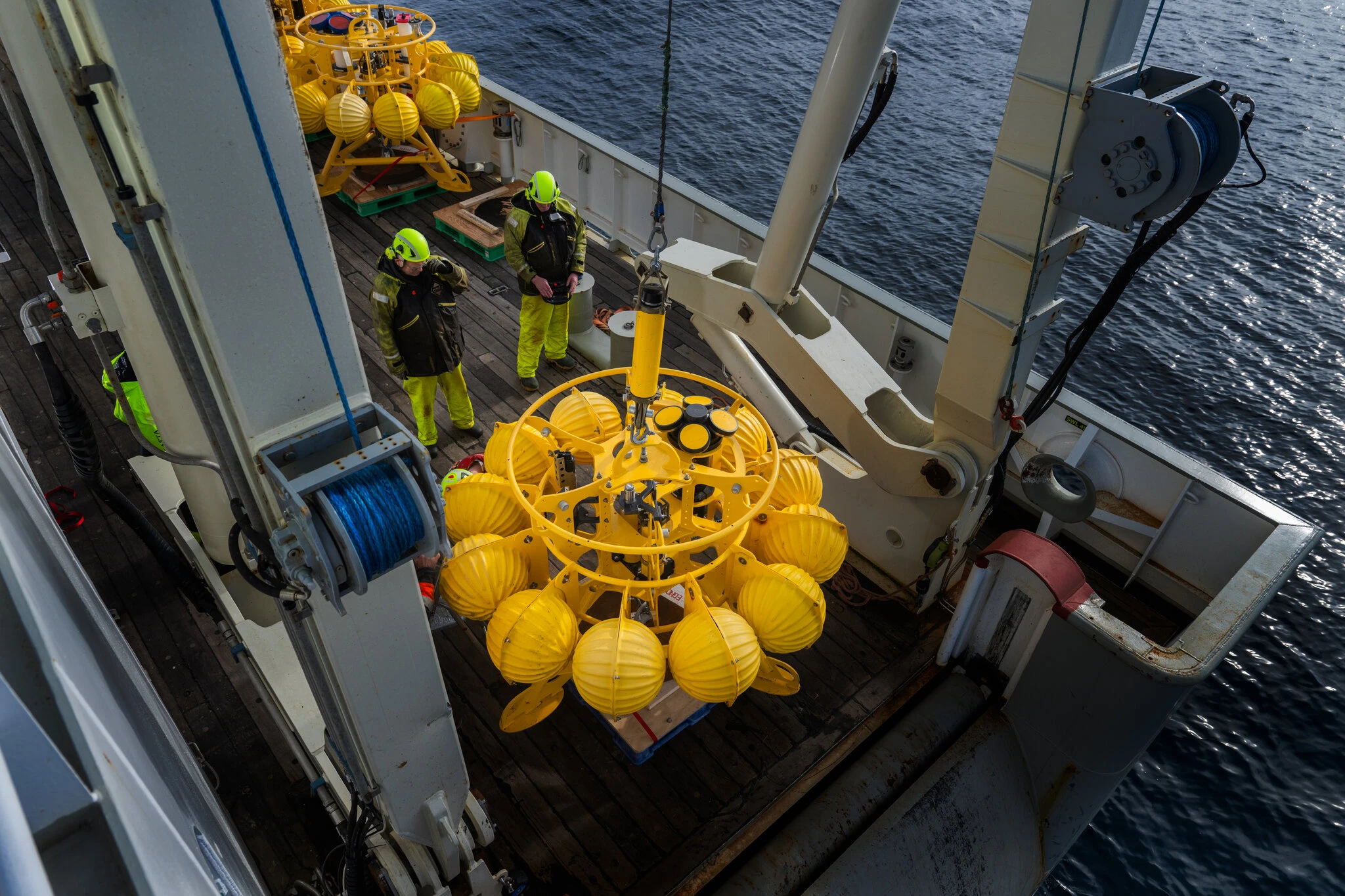
A mooring, which measures current speed, temperature and salinity for a year, is placed on the seabed.
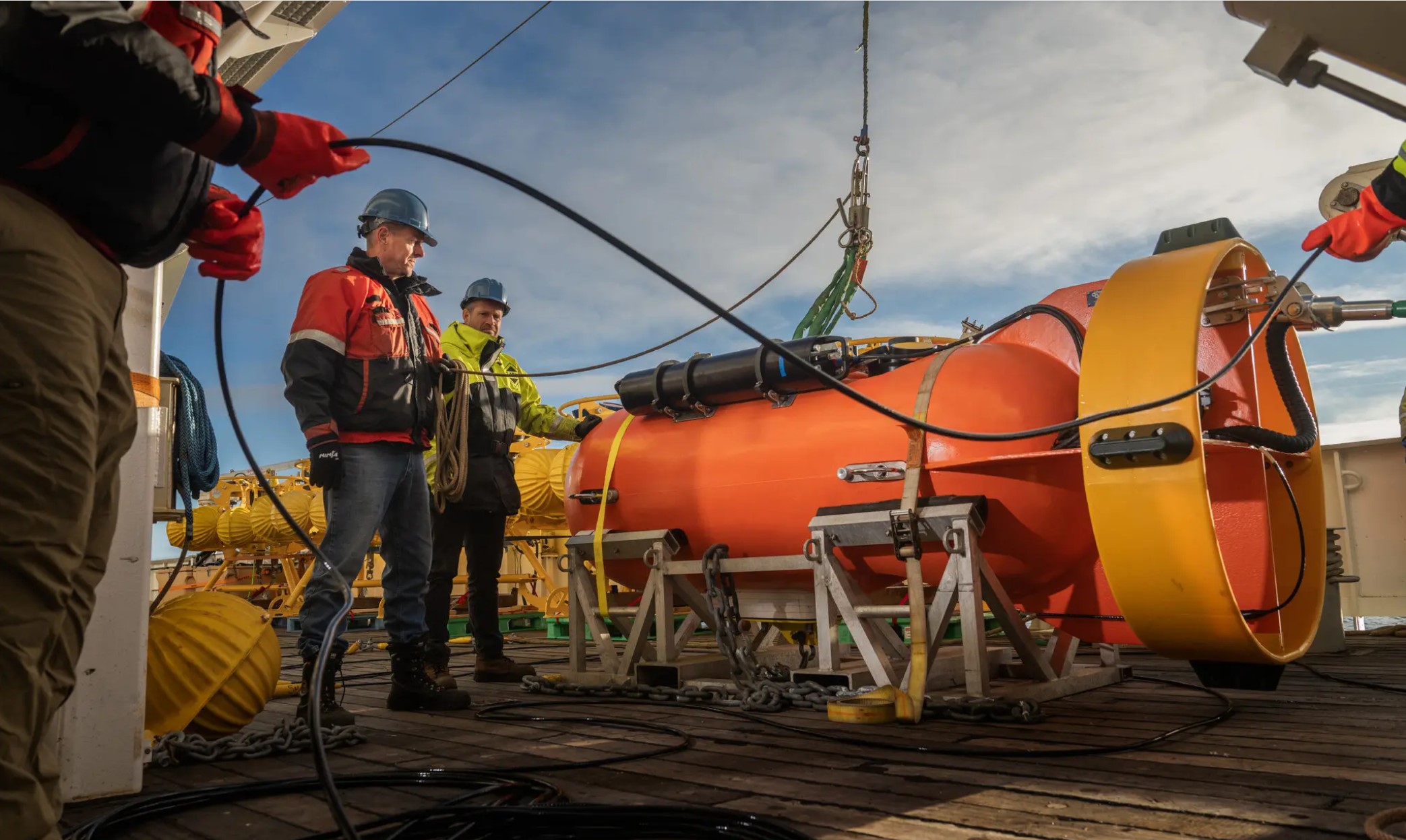
A streamlined “submarine” holds measuring instruments at depth.
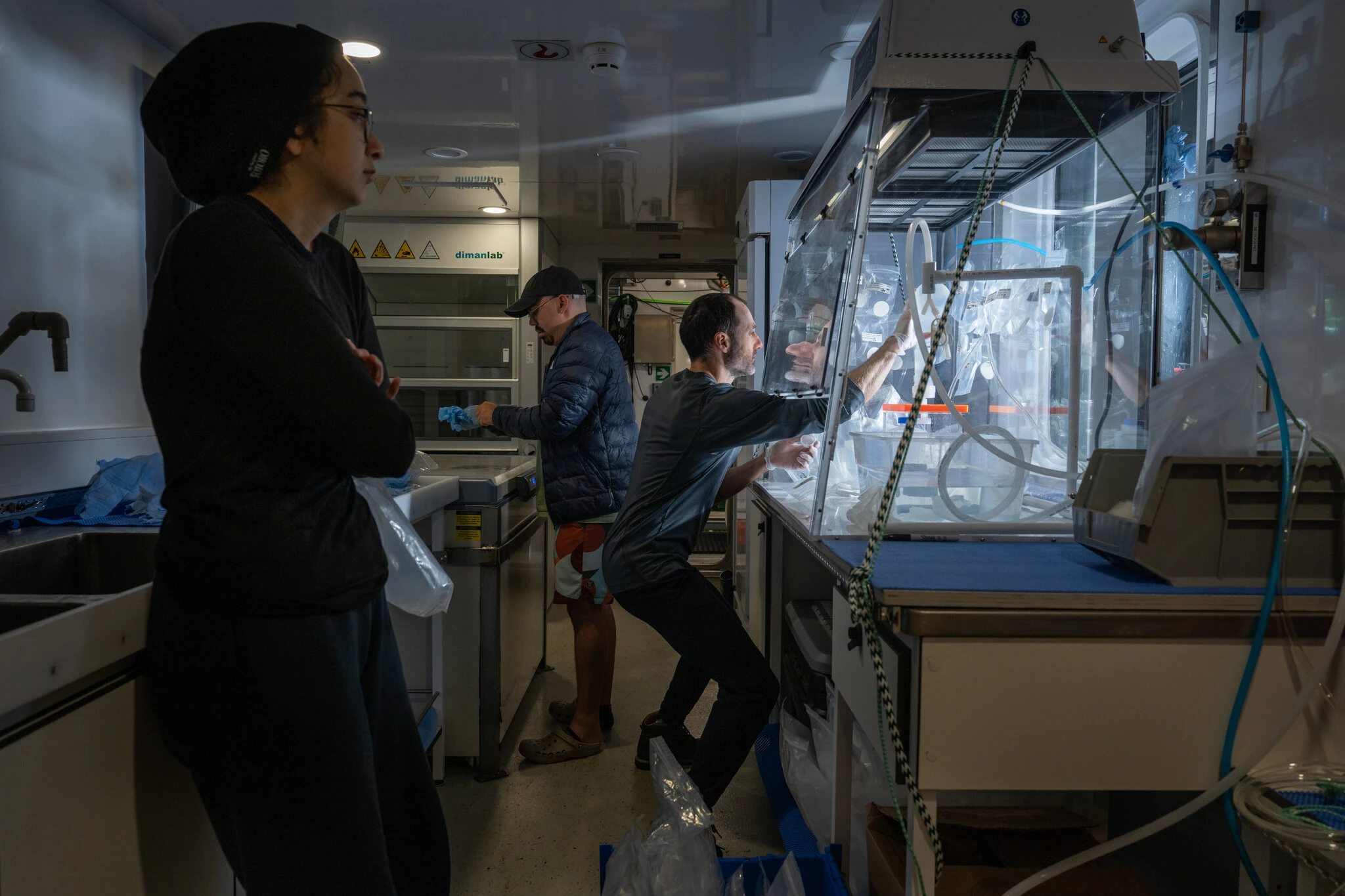
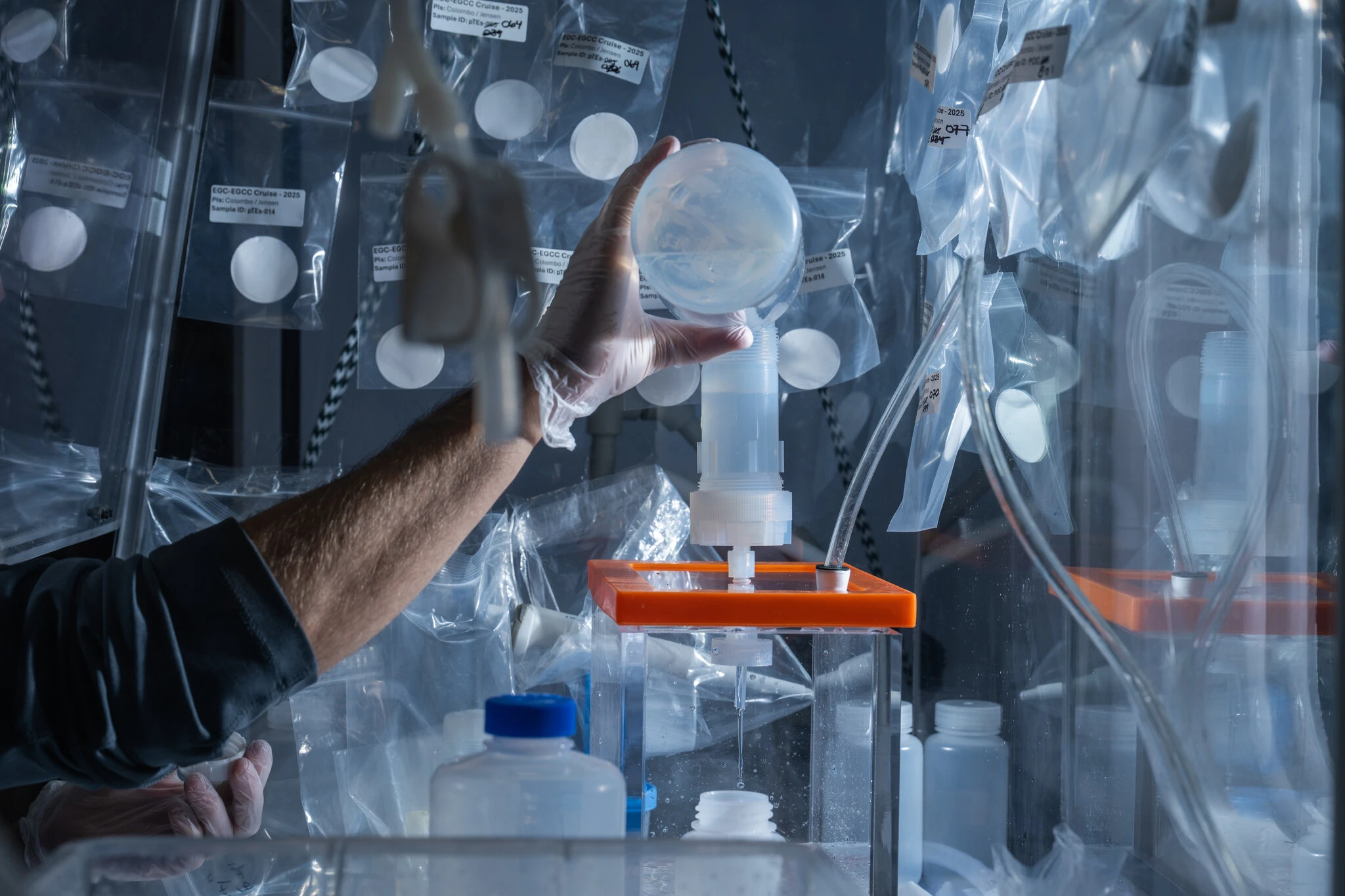
The facilities for research on Þórunn are according to the most stringent modern requirements. Here, seawater samplesare prepared for analysis of trace metals in a special cleanroom.
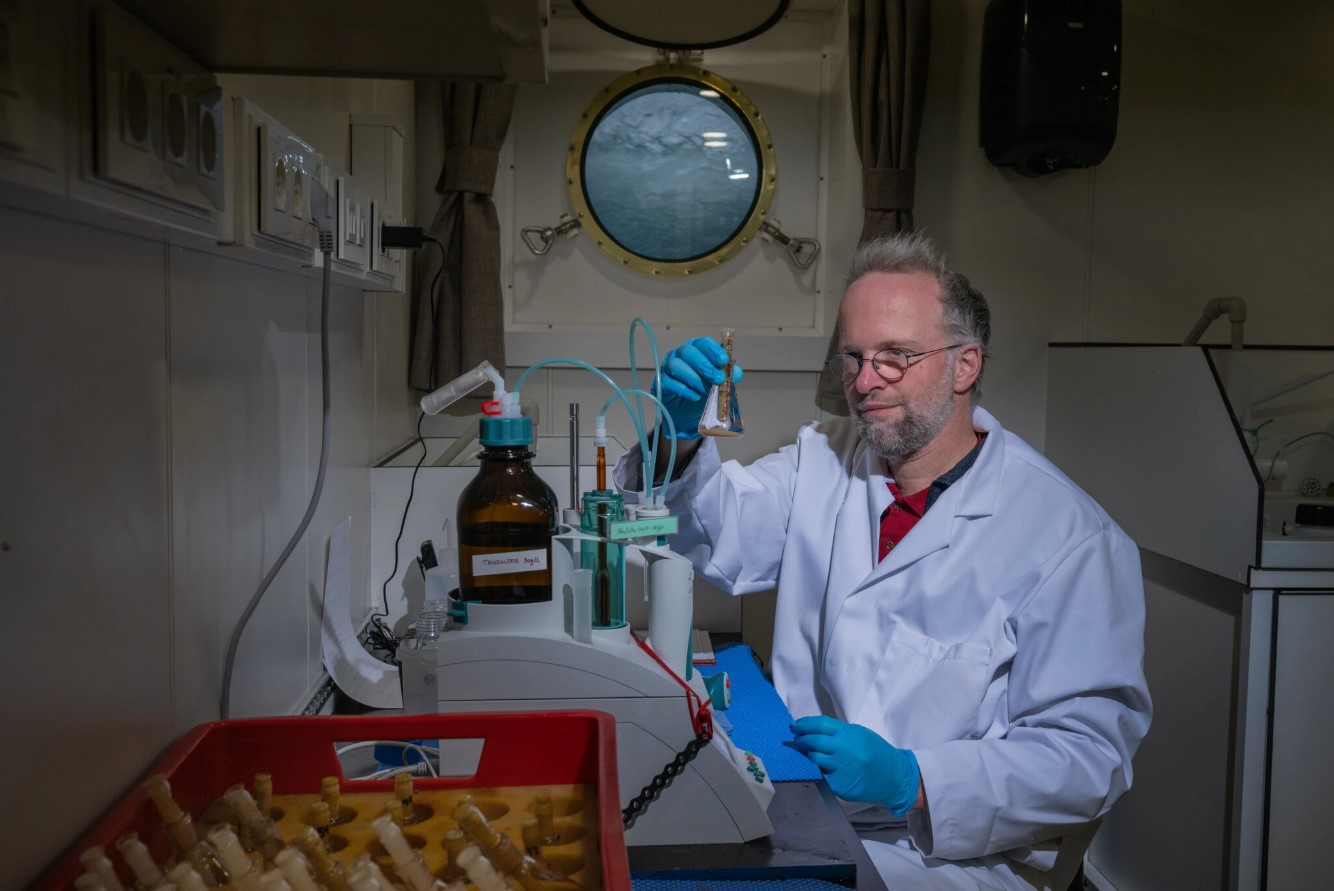
Our man at MFRI, oceanographer Andreas Macrander, participated in the research expedition.
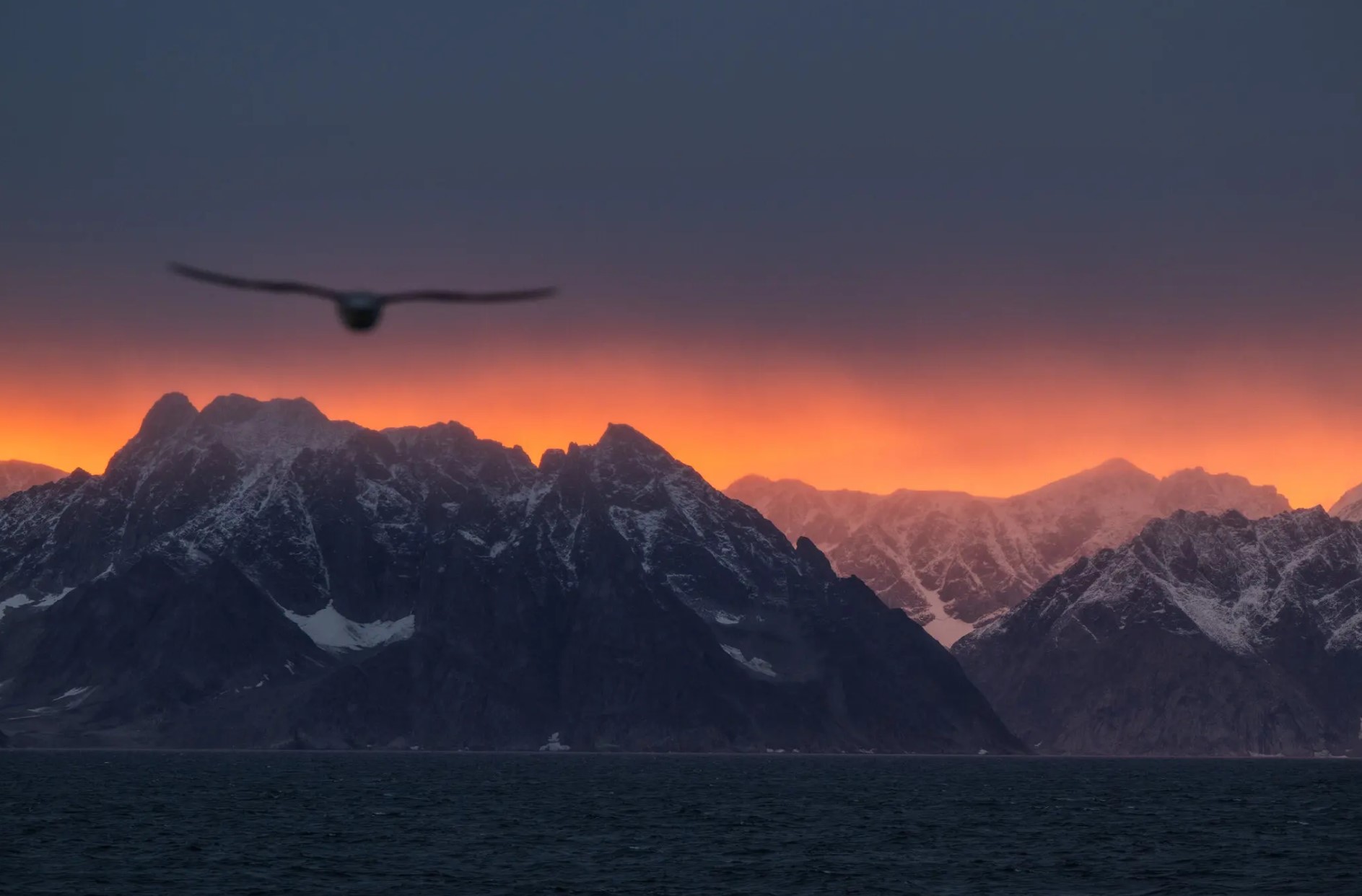
The magnificent landscape of the east coast of Greenland.
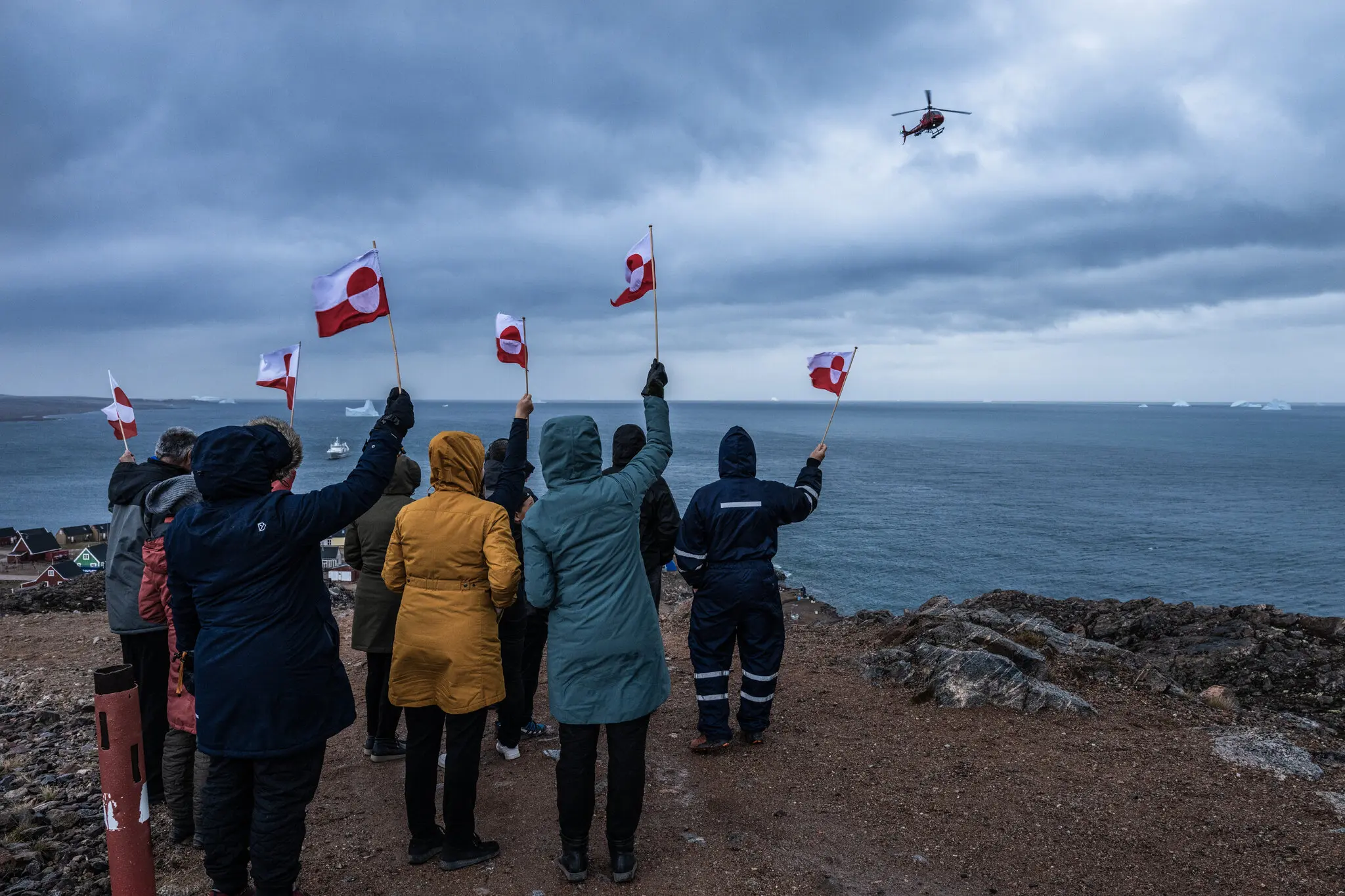
Greenlanders in the remote town of Ittoqqortoormiit welcomed a helicopter carrying passengers and supplies with flags.
The helicopter also brought important spare parts for the research expedition